
IT AMC Services for Companies: Your Guide to a Calm, Productive Workplace
- February 21, 2026
- Posted by:
- Categories:
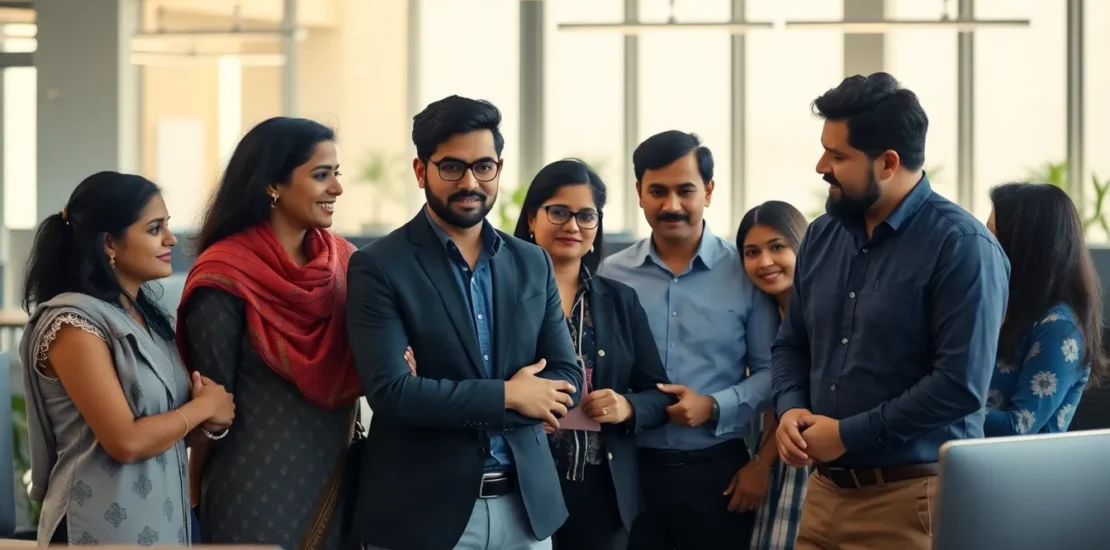
IT AMC services for companies are a proactive partnership where an external provider takes ongoing, structured care of your technology. It’s not just fixing what breaks; it’s preventing breaks from happening, ensuring your software, hardware, and networks run smoothly so your people can focus on their work, not their computers.
I remember walking into the head office of a mid-sized textile exporter in Surat a few years ago. The air was thick—not just with the summer heat, but with a palpable tension. A manager was frantically waving at a frozen screen, an accountant was on hold with a software helpline, and in the corner, their lone, overwhelmed IT guy was literally pulling his hair out. The server had crashed during payroll processing. This wasn’t an “IT problem.” This was a business crisis halting revenue, stressing employees, and eroding trust. That moment, for me, crystallized the real cost of reactive tech management.
That scene plays out daily across Indian enterprises, from bustling startup hubs in Bangalore to family-run factories in Ludhiana. We invest in technology to empower, but without a plan to sustain it, that very investment becomes a source of constant friction. The question shifts from “Do we need IT support?” to “How do we want our business to *feel* every day?” Do you want it to feel like that Surat office—reactive, chaotic, and strained? Or do you want it to feel calm, focused, and resilient?
This is where the true meaning of IT AMC services for companies comes in. It’s the shift from seeing IT as a cost center that you call in desperation, to treating it as the central nervous system of your business that requires regular, professional care. It’s the difference between waiting for a heart attack and having a trusted physician for regular check-ups. Let’s talk about why this mindset isn’t just nice to have; it’s the bedrock of modern work in India.
Why IT AMC Services for Companies Matters in Today’s Indian Workplace
Look at how we work now. Your sales team is closing deals on their phones from a cab in Mumbai traffic. Your design team is collaborating on a large file with a client in Coimbatore. Your operations head is checking real-time inventory from a tablet on the factory floor. The “workplace” is no longer a single location with predictable hours; it’s a dynamic, always-on ecosystem. In this environment, a slow laptop or a patchy VPN isn’t a minor annoyance—it’s a direct block to revenue, collaboration, and client trust.
The specific challenge for Indian businesses is scale and complexity, often with limited in-house bandwidth. You might have a brilliant IT engineer, but can he simultaneously manage server security patches, troubleshoot the CFO’s presentation glitch, negotiate with telecom providers, *and* plan your cloud migration? Probably not. And when he’s swamped with daily firefighting, the strategic, preventative work that prevents major disasters never happens. A robust IT AMC services for companies model acts as a force multiplier. It handles the relentless tide of daily issues with a dedicated team, providing your in-house people (or your entire staff if you have no IT) the breathing room to focus on business, not just technology.
Common Mistakes Organizations Make with IT AMC Services for Companies
The biggest mistake I see is treating the AMC as a transactional “insurance policy.” You sign a contract, file it away, and only remember it when something catastrophic happens. This defeats the entire purpose. The relationship becomes adversarial—you’re calling to make a “claim,” and the provider is, consciously or not, looking to minimize their effort. The focus stays on break-fix, not on health.
Another critical error is the “lowest bidder” approach. In the quest to reduce a line-item cost, companies often choose the provider with the cheapest per-device rate. What you inevitably get is a stretched team providing the bare minimum, defined by a rigid, exclusion-filled contract. That critical server monitoring? Might be an add-on. Support after 6 PM? Extra cost. This model creates hidden expenses in the form of your team’s lost productivity and the eventual major failure that wasn’t covered. Finally, there’s the mistake of exclusion. The finance team negotiates the AMC, the IT head (if one exists) is vaguely consulted, but the end-users—the employees whose daily work depends on this service—are never asked about their pain points. The contract ends up solving the wrong problems.
What a Strong IT AMC Services for Companies Strategy Looks Like
A strong strategy feels like a seamless extension of your own team. It’s proactive, communicative, and aligned with how your business actually operates. The provider knows your people, your key applications, and your growth plans. They don’t just wait for tickets; they analyze trends from your network to predict and prevent issues. They communicate in plain language, not jargon, and their success is measured by how little your team has to think about IT, not by how many tickets they close. Below is the shift in mindset this enables.
| Traditional Approach | Modern, Strategic Approach |
|---|---|
| Reactive: “Call us when it breaks.” | Proactive: Regular health checks, monitoring, and patches to prevent breaks. |
| Cost-Centric: Focus on cheapest per-device rate. | Value-Centric: Focus on uptime, user productivity, and business continuity. |
| Isolated: IT is “their department’s” problem. | Integrated: IT is a shared responsibility, with the AMC partner as a guide. |
| Rigid Contract: Long list of exclusions and add-on costs. | Flexible Partnership: Scalable plan that grows with your business and technology stack. |
| Metric: Number of tickets resolved. | Metric: Reduced downtime, user satisfaction, and progress on strategic tech goals. |
How to Get Started — A Step-by-Step Breakdown
- Look Inward Before You Look Outward. Don’t start by Googling providers. Gather your leadership team and a few key users. Ask: “What tech frustrations are slowing us down weekly?” and “Where do we want to be in 18 months?” This clarity is your most powerful tool.
- Define ‘Health,’ Not Just ‘Repair.’ Based on your inward look, draft a simple list of what “IT health” means for you. Is it 99.9% email uptime? Is it ensuring the design team’s software always runs smoothly? Is it guaranteeing secure remote access for your field staff? This becomes your requirement list.
- Seek Partners, Not Vendors. When you talk to potential providers, present your definition of health. Listen carefully. Do they ask about your business goals? Do they explain how they *prevent* issues? The right partner will be curious, not just eager to quote on your device count.
- Pilot Before You Commit. If possible, start with a 3–6 month pilot for a specific department or location. This isn’t about testing their technical skill (which you must reference-check), but about testing the relationship—their responsiveness, communication style, and understanding of your culture.
- Launch with Transparency. When you begin, introduce the AMC team to your company. Have a simple, clear channel for support (like a single email or portal). Most importantly, set a quarterly business review meeting to look at trends, feedback, and align on upcoming needs. This keeps the partnership strategic.
Real Signs It’s Working
You won’t just see it in a report. You’ll feel it in the rhythm of your office. The most telling sign is the quiet. The frantic calls to “come look at my computer” stop. IT issues move from loud, disruptive crises to quiet, managed workflows that most of the company never even notices. The language changes—people start saying “I’ll log a ticket” instead of panicking.
You’ll see behavioral shifts. Your sales head starts confidently planning a nationwide webinar because she trusts the tech will hold. Your finance team runs month-end closing without the traditional “server anxiety.” Your people start adopting new tools faster because they know reliable support is there if they stumble. Technology becomes an enabler of ideas, not a gatekeeper.
Culturally, it reduces a significant, low-grade stressor. Think of the mental load carried by an employee whose primary tool (their computer) is unreliable. When that friction disappears, energy is redirected toward productive work. The business begins to move faster, not because everyone is working harder, but because a major source of drag has been systematically removed. That’s the ultimate ROI of a well-executed IT AMC services for companies strategy.
Conclusion
That day in Surat, the solution wasn’t a magic server fix. It was a conversation that started with, “What would it take for you to never have a day like today again?” The answer was a shift from heroics to hygiene—from relying on last-minute saves to instituting disciplined, professional care.
For Indian companies aiming to compete and grow, this is non-negotiable. The future of work here is agile, distributed, and digital-first. Your ability to execute depends on a technology foundation that is not just standing, but is resilient, secure, and invisible. Building that foundation requires a partnership, not just a purchase order. It’s about choosing to run your business from a place of calm confidence, where technology fuels ambition instead of thwarting it. Start that conversation in your company today.
— Karthik, Founder, SynergyScape
Transform Your Organization Today
Strategic HR Solutions & Corporate Consulting for Indian Enterprises.
Call: 90366 35585 | Email: synergyscape.blr@gmail.com