
IT Modernization Services: A Human Guide for Indian Businesses
- March 1, 2026
- Posted by:
- Categories:
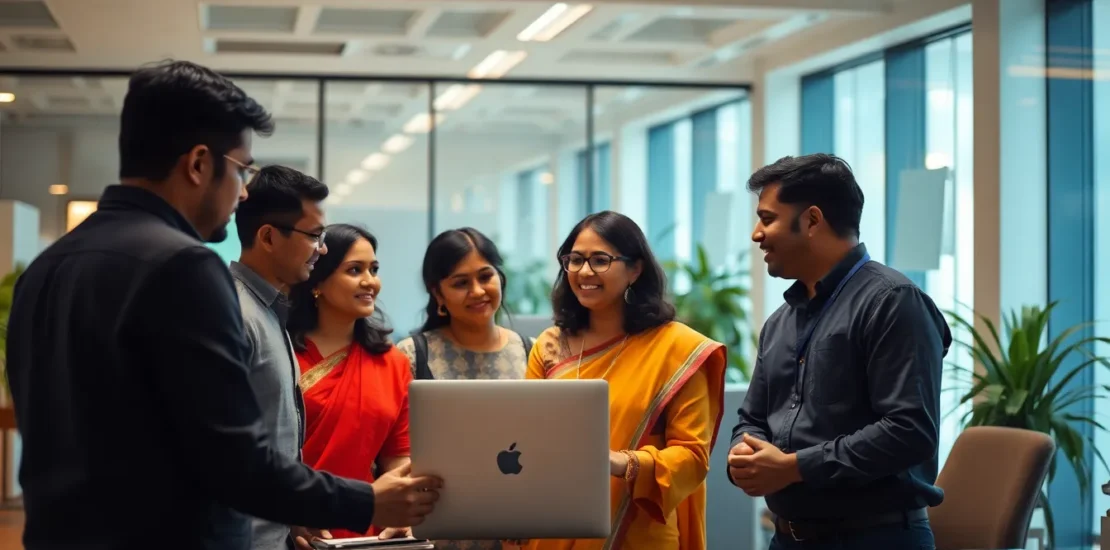
IT modernization services are the strategic process of upgrading your organization’s outdated technology, applications, and processes to become more agile, secure, and efficient. It’s not just about buying new software; it’s about reshaping how your people work and how your business competes in a digital-first market. Done right, it aligns your tech stack directly with your business ambitions.
I remember walking into the headquarters of a respected, family-run manufacturing firm in Coimbatore a few years ago. The reception was polished, the team was warm, but the air was thick with a quiet frustration. The CFO pulled me aside, not to talk numbers, but to show me a physical ledger still being cross-referenced with an ERP system from 2003. “We are growing,” he said, “but it feels like we’re running in sand. Every report is a marathon. Every new customer requirement feels like a crisis.”
That moment, repeated in various forms across India, is the silent scream for IT modernization. It’s not a buzzword you hear in boardrooms; it’s the daily friction your teams swallow. The outdated CRM that forces sales to keep parallel Excel sheets. The legacy server in the corner room that everyone is afraid to touch. The “this is how we’ve always done it” process that adds three days to a task that should take three hours.
Modernization is the answer to that friction. But let’s be clear: in the Indian context, it’s rarely a greenfield “rip and replace” project. It’s a nuanced, phased, and deeply human-centric transformation. It’s about preserving what works—your core business wisdom, your relationships—while surgically injecting new technology to empower, not disrupt. This guide is for the leader who feels that friction and knows, in their gut, that there must be a better way.
Why IT Modernization Services Matter in Today’s Indian Workplace
The reason is no longer just “keeping up.” It’s about survival and sovereignty. The Indian market is a unique beast—incredibly competitive, price-sensitive, and relationship-driven, yet now fully digital in its expectations. Your youngest sales executive uses UPI for everything, collaborates on WhatsApp, and expects business tools to be just as intuitive. When they log into your clunky, on-premise system that times out, you’re not just losing productivity; you’re telling them their way of working is wrong. The talent drain is real, and it starts with the tools you provide.
Beyond talent, it’s about resilience. Many of India’s economic champions are mid-sized enterprises running on infrastructure purchased a decade ago. That infrastructure wasn’t built for remote work, real-time data analytics, or the threat landscape of 2024. A security breach or a system outage isn’t an IT problem; it’s a direct hit to your reputation and your balance sheet. Modernization, particularly through managed cloud services and robust security frameworks, is your insurance policy. It moves tech from a cost center you manage to a strategic asset that manages and protects your growth.
Common Mistakes Organizations Make with IT Modernization Services
The biggest mistake I see is treating it as a purely technical procurement exercise. The leadership team approves a budget, hands it to the IT head, and says “upgrade us.” This inevitably leads to buying shiny new tools that nobody uses effectively. The technology changes, but the processes—and more importantly, the mindset—remain stuck in the past. You’ve spent crores to automate a broken process, only making it faster at being wrong.
Another critical error is the “Big Bang” approach. The ambition to modernize everything at once is understandable but dangerous. It creates unbearable disruption, exhausts your team, and puts your entire business operation at risk if the rollout fails. In the Indian context, where business continuity is sacred, this is a cardinal sin. Similarly, focusing only on front-end applications while ignoring the “plumbing”—the databases, integration layers, and data architecture—is like renovating a building’s facade while the foundation cracks. The new system looks great for six months, then performance slows to a crawl because the legacy backend can’t handle the load.
What a Strong IT Modernization Strategy Looks Like
A strong strategy is business-outcome-first, not technology-first. It starts with a simple question: “What do we need to do better for our customers and our people?” From there, it builds a phased, hybrid plan that respects your existing investments while deliberately moving capability to modern platforms. It’s a balance of tactical fixes and strategic shifts. The table below captures the shift in thinking:
| Traditional Approach | Modern Approach |
|---|---|
| Lift-and-shift legacy systems to the cloud without redesign. | Refactor applications for cloud-native benefits (scale, cost). |
| Long, multi-year projects with a single “go-live” date. | Agile, iterative releases delivering value every few weeks. |
| IT department drives the project in isolation. | Cross-functional “squads” (business + IT) co-create solutions. |
| Focus on uptime and cost reduction. | Focus on developer velocity, customer experience, and innovation. |
| Vendor manages the technology entirely. | Your team builds internal capability to own and adapt the tech. |
How to Get Started — A Step-by-Step Breakdown
- Define the ‘Why’ from the Ground Up: Don’t start with a tech audit. Interview your teams. Sit with finance, sales, operations. Document their biggest daily frustrations and their vision for an ideal workflow. This human data is your true north.
- Conduct an Honest Application Inventory: List every software, platform, and system. Categorize them: Which are strategic? Which are just familiar? Which are redundant? This isn’t about shame; it’s about creating a clear, factual landscape.
- Prioritize Based on Business Impact, Not Complexity: Choose your first modernization battle. Look for the project that, if successful, will deliver a visible win—like reducing customer complaint resolution time by 50%. Early wins build crucial belief.
- Build a Hybrid Team: Form a small, dedicated team with two of your best IT minds and two power-users from the business unit affected. This team will bridge the gap between technical possibility and operational reality.
- Pilot, Learn, and Then Scale: Run a controlled pilot for the first application or process. Measure everything—speed, errors, user satisfaction. Use these learnings to adjust your plan before you commit to a full-scale, company-wide rollout.
Real Signs It’s Working
You’ll see the metrics improve—faster processing times, lower downtime. But the real signs are more human. You’ll hear a mid-level manager say, “I pulled that report myself in five minutes,” instead of filing a ticket with IT and waiting two days. That’s a shift from dependency to empowerment.
Watch for reduced tribal knowledge. In legacy environments, one person often holds the keys to a critical process. As you modernize with intuitive systems and documented workflows, that bottleneck disappears. Teams start collaborating on the platform itself, not through a series of emails and WhatsApp messages. Information starts to flow with the business, not against it.
Finally, you’ll feel a change in the IT team’s energy. Instead of constantly fighting fires and maintaining aging systems, they become engaged in solutioning sessions with business units. They shift from being seen as gatekeepers to being valued as enablers. This cultural shift—where technology is a conversation, not a complaint—is the ultimate sign your IT modernization services strategy is taking root.
Conclusion
That firm in Coimbatore? We started not with their ERP, but with their sales team’s mobile reporting. A small, focused change. Six months later, the CFO wasn’t just happy with the time saved; he was using real-time dashboards to make pricing decisions. The modernization had moved from an IT project to a business capability.
That’s the journey. IT modernization services are the vehicle, but the destination is a more resilient, agile, and human-friendly organization. For Indian businesses standing at the crossroads of legacy and ambition, the path forward isn’t about discarding your past. It’s about thoughtfully building upon it, so your people and your business can run on solid ground, not in sand. The future of work in India belongs to those who empower their people with technology that feels like an ally, not an anchor.
— Karthik, Founder, SynergyScape
Transform Your Organization Today
Strategic HR Solutions & Corporate Consulting for Indian Enterprises.
Call: 90366 35585 | Email: synergyscape.blr@gmail.com