
What Are the Best Video Conferencing Solutions for Bangalore Businesses? A Strategic Guide
- April 4, 2026
- Posted by:
- Category: Business Strategy & OD
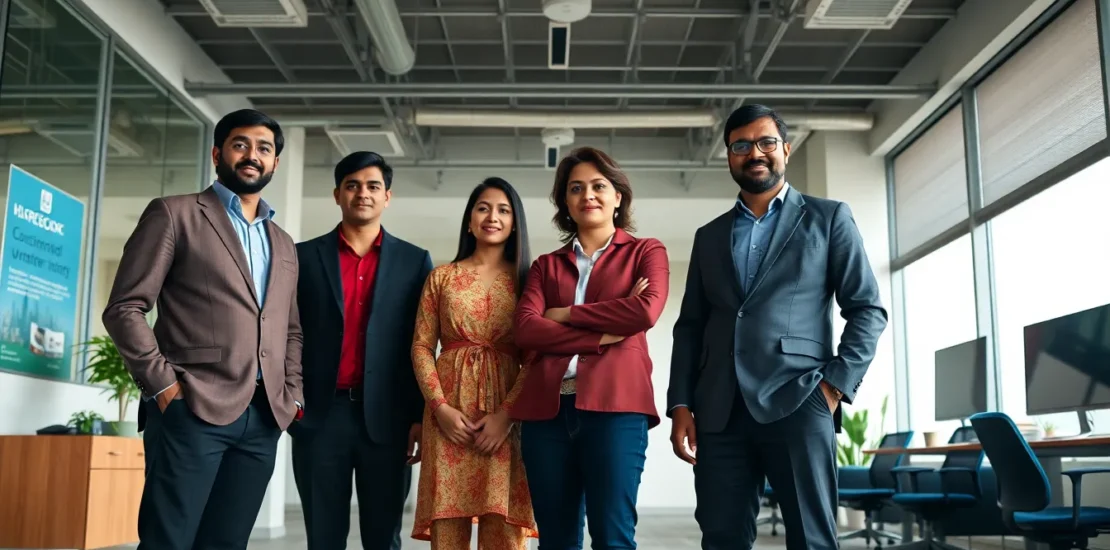
“Video conferencing solutions Bangalore” refers to the integrated suite of hardware, software, and managed services that enable businesses in Bangalore to conduct face-to-face meetings, training, and collaboration remotely. It’s not just about installing a Zoom license; it’s about creating a seamless, reliable, and culturally fitting communication ecosystem for a distributed workforce. For Bangalore’s unique business landscape, this means solutions that bridge the gap between global HQ expectations and local office realities.
I walked into the boardroom of a thriving mid-sized SaaS firm in Koramangala last year. The CEO, Ravi, gestured to a sleek, expensive-looking video conferencing unit sitting unused in the corner. “We bought the best,” he said, frustration in his voice. “But our sales team in Mumbai still joins from their phones, the audio echoes, and our weekly all-hands feels like a chaotic radio show. Our US investors complained last week.” The hardware was world-class. The *solution* was non-existent. That silent, gleaming device in the corner is the perfect metaphor for what happens when companies in Bangalore—and across India—confuse purchasing technology with building a capability.
Bangalore’s ecosystem is a pressure cooker of innovation, global collaboration, and rapid scaling. You’re not just managing a team in Whitefield and Indiranagar; you’re coordinating with developers in Bhubaneswar, sales in Delhi, and stakeholders in Silicon Valley. The old model of flying down for quarterly reviews is dead. Your communication fabric is now digital, and if it frays, everything else—productivity, culture, decision velocity—unravels.
This guide isn’t about listing software brands. It’s a strategic blueprint from the trenches of Indian organizational development. We’ll cut through the hype. We’ll talk about the real challenges—from bandwidth hiccups to the simple human reluctance to click “camera on.” And we’ll build a practical, step-by-step plan to turn video conferencing solutions Bangalore from a cost centre into your most powerful engine for connection and growth.
#What Is Video Conferencing Solutions Bangalore and Why Should Indian Businesses Care?
At its core, a true video conferencing solutions Bangalore strategy is the deliberate design of how your people connect visually across locations. It’s the policy that encourages camera use, the IT support that pre-tests room systems, the cultural nudge that makes a virtual meeting as respectful and effective as an in-person one. For Indian businesses, this is no longer a “nice-to-have” for multinationals. It’s a survival and scaling imperative.
First, consider talent. Bangalore’s war for talent is fierce, and geographic flexibility is a key weapon. To tap into the best minds in Pune, Chennai, or Goa, you need to make them feel present in the room on Infantry Road. A shoddy video experience where they can’t hear or be heard reinforces their “outsider” status. A seamless one makes them a team member. Second, it’s about operational resilience. The monsoon floods that snarl Bangalore traffic, the sudden bandhs—these can’t bring your company to a halt. A mature video conferencing culture keeps work flowing.
Finally, and most critically for Indian enterprises with global ambitions, it’s about perceived professionalism. When you pitch to a German automaker or a Singaporean fund, your virtual presence is your company’s stage. Pixelated video, broken audio, and colleagues talking over each other undermine credibility before a word is spoken. Investing in robust video conferencing solutions Bangalore isn’t an IT expense; it’s an investment in your market reputation and your ability to compete on a global stage from your Bangalore HQ.
#What Are the Biggest Challenges with Video Conferencing Solutions Bangalore?
The path is littered with good intentions and bad execution. The most common failure I see is the “Siloed Purchase.” The Facilities team buys a fancy room system. IT provisions Microsoft Teams licenses. HR runs training on Google Meet. None of it talks to each other, creating a nightmare of incompatibility. An executive tries to call into a room system from their laptop and spends 10 minutes fighting with passcodes. The meeting’s purpose is dead before it starts.
Then, we have the “Human Factor.” In many Indian workplaces, there’s a deeply ingrained habit of deferring to the most senior person in the room. In a hybrid meeting, if the boss is physically present in Bangalore and remote attendees are on a screen, they often become spectators. They mute themselves, turn cameras off, and disengage. The technology works, but the culture actively works against it. Furthermore, the simple act of “camera on” meets resistance—from bandwidth anxiety to self-consciousness about home backgrounds—that pure policy can’t overcome.
Infrastructure, Bangalore’s own double-edged sword, is the third pillar. While the city is tech-central, consistent high-bandwidth connectivity is not a universal guarantee. In many corporate parks or during peak hours, latency and packet loss turn video into a choppy, frustrating slideshow. Companies also grossly underestimate acoustic design. The open-plan office, so popular here, is a disaster for video calls. The cacophony of sales calls, developer discussions, and cafeteria noise creates an unprofessional audio bleed that no software can fully fix. You invested in 4K video, but your meeting sounds like it’s happening in a chai stall.
#How Does a Strong Video Conferencing Solutions Bangalore Strategy Actually Work?
It works by being an invisible, reliable utility. Like electricity, you only notice it when it fails. A strong strategy seamlessly blends technology, physical space, and human behaviour into a single, coherent experience. It’s less about the brand of camera and more about the guarantee that any meeting, anywhere, will start with a single click and have clear audio and video. It democratizes presence, so the junior analyst dialling in from home has the same ability to contribute as the VP in the leather chair.
The difference between common practice and what actually creates transformation is stark. Let’s break it down:
| What Most Companies Do | What Actually Works |
|---|---|
| Buy a single “all-in-one” premium system for the boardroom only. | Deploy a standardized, interoperable ecosystem (e.g., Zoom Rooms, Teams Rooms) across all huddle and meeting spaces. |
| Leave meeting etiquette to chance (“Please mute yourself”). | Train meeting champions and establish a “Remote-First” protocol where all participants join from their own device, even if in the office. |
| Use consumer-grade speakers/mics in meeting rooms. | Invest in professional acoustic treatment and beamforming microphone arrays that isolate speaker voice. |
| Treat video conferencing as separate from core workflows. | Deeply integrate the VC solution with calendar (Outlook/Google), productivity suites (M365, G-Workspace), and company intranet. |
| Provide support only when something breaks. | Have dedicated “Video Concierge” staff or IT members who proactively manage and join the first minute of critical external meetings. |
| Assume once installed, the job is done. | Continuously gather feedback and usage analytics to see which rooms/teams struggle and iterate on training and tech. |
#How to Implement Video Conferencing Solutions Bangalore Step by Step
1. Diagnose, Don’t Assume. Before you spend a rupee, run a two-week audit. Use survey tools and interview department heads. How many internal vs. external meetings happen? What’s the common attendee geography? What are the top three complaints today? Is it audio, screen sharing, or simply starting the call? This data is your blueprint. I’ve seen companies discover 40% of their “tech” issues were simply people not knowing how to share sound on a PowerPoint.
2. Form a Cross-Functional “Experience Pod.” This is critical. Your pod must include IT (for tech), Facilities (for rooms), HR/Internal Comms (for culture), and 2-3 power users from sales, engineering, and operations. This group owns the end-to-end experience, preventing the silos that kill projects. They are the voice of the employee in every vendor demo and design decision.
3. Design for the Lowest Common Denominator. Your solution must work flawlessly for the most critical, vulnerable connection. That’s often a salesperson on a 4G hotspot in a client’s office, or a new hire in a tier-2 city with modest broadband. Choose platforms with strong mobile apps and adaptive bandwidth usage. Prioritize crystal-clear audio over 4K video. If the audio is perfect, a meeting succeeds even if video drops to standard definition.
4. Standardize and Simplify the Physical Touchpoint. Choose one primary platform (e.g., Teams *or* Zoom) as your company standard. Then, outfit every meeting room—from the 4-person huddle room to the large training room—with a consistent, simple interface. A one-touch join button, an intuitive touch panel, and a calibrated camera/mic/speaker set. The experience should be identical room to room. This reduces cognitive load and training overhead dramatically.
5. Launch with “Why,” Then “How.” Rollout is a change management campaign. Communicate the *strategic why* from leadership: “This is how we connect with our global talent and clients.” Then, follow with hyper-practical, role-based “how” training. Create 90-second video tutorials: “How to host a client review,” “How to run a sprint planning.” Make champions out of early adopters and celebrate their success stories.
6. Measure Adoption, Not Just Uptime. IT will track system uptime (99.9%). You must track behavioural metrics: percentage of meetings with video on, utilization rates of different room types, feedback scores from external participants. This tells you if the solution is being *used effectively*, not just if it’s switched on. Review this data monthly with your Experience Pod.
#What Results Can You Expect from Video Conferencing Solutions Bangalore?
The first changes are behavioural, and they’re powerful. You’ll notice meetings start on time. The five-minute fumble for connections is gone. You’ll see more faces on screen, and not just from leadership. Junior team members begin to speak up because the “virtual raise hand” function or chat panel gives them a safer channel than interrupting a physical room. Decision cycles shorten. That quick clarification that used to wait for a chance encounter now happens in an instant 5-minute huddle call between Bangalore and Hyderabad.
Culturally, the walls between locations begin to dissolve. When the Pune team becomes a gallery of familiar faces instead of an anonymous dial-in number, collaboration deepens. One manufacturing client saw a 30% reduction in email threads for project coordination within three months, as teams defaulted to quick video calls. On the hard metrics front, expect a significant drop in travel and related T&E costs—savings of 15-25% are common for companies with regular inter-city travel. More importantly, you reclaim productivity. The 6 hours spent traveling to Chennai for a 2-hour meeting are now 6 hours of focused work.
Perhaps the most profound result is in talent retention and attraction. You become a “flexible-ready” organization. When a star employee needs to relocate for family reasons, you don’t lose them. You simply adjust their “location” in the HR system. Your talent pool expands from a 20-kilometre radius around your office to the entire country. For a Bangalore business, this is a strategic game-changer in a tight market.
#What Do Experts Say About Video Conferencing Solutions Bangalore?
Industry thought leaders have moved far beyond viewing this as a tactical IT tool. McKinsey’s research on the “hybrid work model” emphasizes that productivity hinges on “digital fluency” and the intentional design of collaboration moments. They argue that companies must invest in the “collaboration tech stack” with the same rigour as their production stack. For Bangalore, a city built on knowledge work, this stack’s centrepiece is a reliable, inclusive video conferencing ecosystem.
NASSCOM’s Future of Work reports consistently highlight that Indian IT and tech services companies are leading in hybrid adoption, but the quality of the experience is uneven. Their guidance stresses that technology must enable “equity of experience.” This is the core challenge for video conferencing solutions Bangalore: ensuring the remote participant has parity with those in the room. Frameworks like the “Remote-First Meeting Protocol,” advocated by consultants like Deloitte, provide concrete methods—such as all participants joining on individual devices with headsets—to architect this equity deliberately.
Furthermore, organizational development frameworks like SHRM’s model for connected workplaces identify “technology-enabled communication” as a key driver of employee engagement. It’s not just about enabling work; it’s about fostering belonging. A well-executed video strategy directly impacts engagement scores by reducing the isolation that remote and hybrid employees can feel, a critical factor for Bangalore’s vast population of professionals who may have relocated from other states and rely on digital connections for workplace integration.
#Conclusion
That expensive unit in Ravi’s Koramangala boardroom? Six months after we rebuilt his strategy from the ground up, it’s no longer a monument to frustration. It’s a utility. His Mumbai sales lead now runs her team briefings from it effortlessly. The US investors get a flawless, professional window into their Indian investment. But more importantly, the culture shifted. They now have “No-Video Wednesdays” for deep work, and “All-Camera Fridays” for team bonding. The tool serves the people, not the other way around.
Your journey with video conferencing solutions Bangalore will be similar. It starts with a technical problem but ends as a cultural transformation. It’s about choosing to connect intentionally in a fragmented world. In the next decade, the competitive advantage for Bangalore businesses won’t just be *what* you build, but *how* you connect your brilliant minds to build it together. Start building that connection today.
Frequently Asked Questions About video conferencing solutions Bangalore
What is the average cost of implementing a video conferencing solution for a mid-sized company in Bangalore?
It’s highly variable, but think in terms of layers: Software licenses (₹1,500-₹2,500 per user/year), hardware per room (₹2-₹15 lakhs depending on size and quality), and potential managed services. For a 100-person company with 5 meeting rooms, a robust initial investment could range from ₹15-₹30 lakhs, with annual recurring costs for licenses and support. The key is to scale thoughtfully, not buy everything upfront.
Which is better for Bangalore businesses: Zoom, Microsoft Teams, or Google Meet?
There’s no universal ‘best.’ It depends on your ecosystem. If your company lives on Microsoft 365 (Outlook, SharePoint), Teams offers deep, seamless integration. If you’re a Google Workspace shop, Meet is native. Zoom often wins for pure meeting reliability, ease of use for external participants, and large webinar features. The best strategy is often choosing one as your company standard to avoid fragmentation.
How do we handle poor internet bandwidth issues for remote employees in other Indian cities?
First, choose a platform (like Zoom or Teams) with excellent bandwidth adaptation. Second, mandate and provide good quality headsets for all employees—this drastically improves audio clarity on low bandwidth. Third, establish a protocol: if video is choppy, turn off video and rely on screen sharing + audio. Finally, consider a small stipend for employees to upgrade their home broadband, which is often more cost-effective than lost productivity.
Can video conferencing solutions be integrated with our existing calendar and productivity tools?
Absolutely, and they must be. Modern solutions like Zoom, Teams, and Google Meet integrate directly with Google Calendar and Microsoft Outlook. This allows one-click joining from calendar invites and automatic room scheduling. Deeper integration with Slack, Salesforce, or your project management tools (Jira, Asana) is also possible via APIs, creating a seamless workflow where you can launch a call from within the tool you’re working in.
What are the biggest security concerns with video conferencing, and how do we mitigate them?
Key concerns are ‘Zoom-bombing’ (uninvited guests), data privacy, and unauthorized recording. Mitigation is straightforward: 1) Always use meeting passwords and waiting rooms. 2) Ensure your provider uses end-to-end encryption or strong transit encryption. 3) Purchase licenses from the provider directly (not third-party resellers) to ensure compliance with data residency laws. 4) Use in-built corporate governance tools to control recording permissions and data storage locations (e.g., within India).
How long does a typical implementation and rollout take?
For a phased rollout, expect 8-12 weeks from project kickoff to full adoption. Weeks 1-4: Discovery and planning with your Experience Pod. Weeks 5-8: Pilot installation in 2-3 high-use rooms, initial training for champions. Weeks 9-12: Broader hardware rollout, company-wide communication and training launch, and feedback collection. The cultural shift to high adoption takes 3-6 months of consistent reinforcement and support.
“Real synergy isn’t built in a day — it’s engineered through strategic interventions that align people with goals.”
— Karthik, Founder & Principal Consultant, SynergyScape
Founder & Principal Consultant, SynergyScape | 15+ Years in HR Consulting & Organizational Development across Indian Enterprises
Transform Your Organization Today
Strategic HR Solutions & Corporate Consulting for Indian Enterprises.
Call: 90366 35585 | Email: synergyscape.blr@gmail.com
Related Articles You Might Find Useful
- How to Choose the Right Unified Communication Solutions in Bangalore for Your Industry?
- What Is the 90-Day Action Plan for Implementing VoIP Solutions in Bangalore?
- Is Your Business Ready for IP PBX Installation Bangalore? A 2025 Data-Driven Guide
- What Are Business Communication Solutions Bangalore and How Do They Transform Companies?
- How Do Perimeter Security Solutions in Bangalore Differ for IT, Manufacturing, and Healthcare?