
What Does a Professional Conference Room Setup in Bangalore Actually Involve?
- April 22, 2026
- Posted by:
- Category: Business Strategy & OD
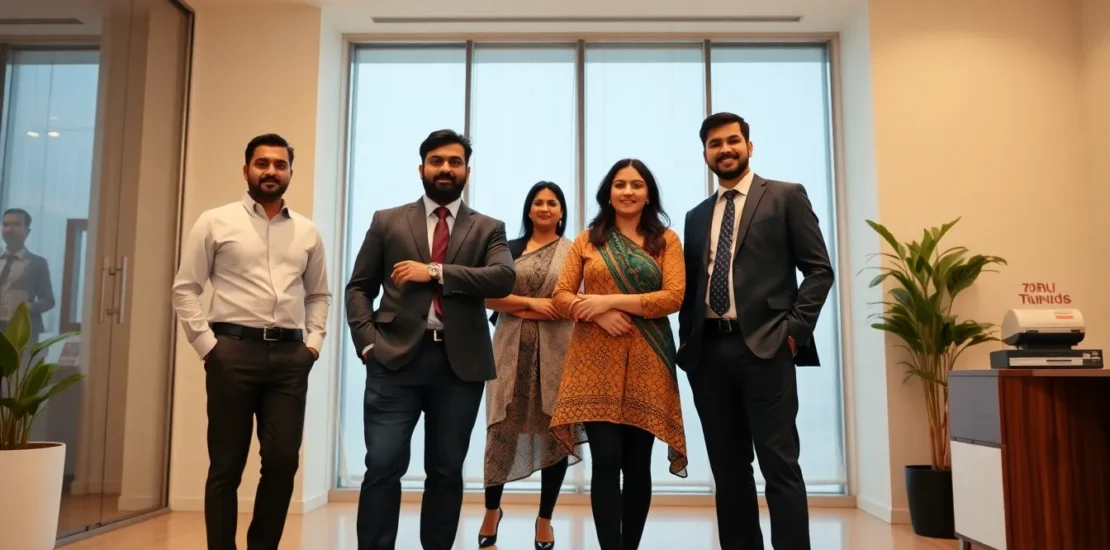
In Bangalore’s business landscape, “conference room setup” is the strategic design and integration of a physical meeting space with the right technology, acoustics, and ergonomics to enable effective collaboration. It moves beyond just buying a table and a projector to creating an environment that actively supports decision-making, client engagement, and hybrid work. For companies here, it’s a critical investment in productivity and professional image.
I walked into a mid-sized SaaS firm in Whitefield last year. The CEO wanted to discuss “collaboration issues.” He led me to their flagship conference room—a glass-walled box with a stunning city view. Then he tapped the touch panel. Nothing. A junior executive rushed in, fiddled with wires under the table, and finally got the screen to flicker on. The video call with their US client was a mess of echo and frozen frames. The CEO looked at me and said, “We spent 12 lakhs on this. Why does it feel like we’re apologising for our own office?” That moment crystallises it. In Bangalore, where every interaction can be a global one, your conference room isn’t just a room. It’s your command centre, your first impression, and often, your weakest link.
You see, Bangalore’s business culture is a unique blend. It’s deeply technical, fast-paced, and globally connected, yet it often operates within the very real constraints of infrastructure—power cuts, internet variability, and space limitations. The conference room is where this tension plays out daily. It’s where local ingenuity meets international expectation.
For 15 years, through SynergyScape, I’ve seen how these spaces can silently throttle ambition or accelerate it. A poorly set up room doesn’t just waste ten minutes of a meeting; it wastes the collective intellectual capital of everyone in it. It frustrates your best people, undermines your authority with clients, and tells a story of a company that can build software for the world but can’t run a simple video call. This guide isn’t about AV specs. It’s about building spaces that work as hard as your team does.
#What Is conference room setup Bangalore and Why Should Indian Businesses Care?
At its core, conference room setup Bangalore is the deliberate orchestration of space, technology, and human behaviour to facilitate flawless business communication. In a city that’s the tech backbone of the nation, it means creating a hub that is as reliable and intelligent as the solutions your company builds. It’s the physical layer of your digital strategy.
Indian businesses, especially in Bangalore, should care because the stakes have fundamentally changed. Pre-2020, a mediocre room was an inconvenience. Today, with hybrid work being the default, it’s a critical business risk. Your Bangalore office is no longer just where your employees sit; it’s the primary studio for all distributed collaboration. When your team in Bangalore connects with colleagues in Pune, investors in Mumbai, and clients in Berlin, that room is the single point of failure for all those relationships. It directly impacts deal velocity, innovation cycles, and talent retention.
Furthermore, Bangalore is a hyper-competitive talent market. The best engineers, designers, and strategists have options. They’ve experienced great setups at global firms or from their home offices. Walking into a dim, cacophonous room with a screeching speakerphone is a cultural downgrade. Investing in thoughtful conference room setup is a tangible signal that you invest in the work experience itself. It tells your team, “We care about how you collaborate,” which is now as important as what you collaborate on.
#What Are the Biggest Challenges with conference room setup Bangalore?
The challenges here are uniquely contextual. The first is the “Shiny Object” Trap. Companies often get sold an expensive, feature-rich AV system by a vendor, without a workflow audit. You end up with a 12-zone speaker system in a 12×12 room, controlled by a confusing touchpad nobody dares to touch. The technology dictates the behaviour, instead of enabling it. The room looks sophisticated but is practically unusable for the daily stand-up or client workshop.
Then comes the Acoustic Nightmare. Bangalore offices are often in open-plan floors or buildings with thin glass facades. Internal noise from the pantry, external noise from traffic and construction, and reverberation within the room itself create a perfect storm. On a video call, remote participants hear a distorted echo chamber, forcing your on-site team to pass a single microphone around—killing all spontaneity. I’ve seen brilliant technical architects reduced to whispering because the room amplifies every rustle of paper.
Finally, there’s the Hybrid Handicap. Most setups are still designed for the people in the room. The camera is an afterthought, often a poor-quality webcam perched on top of a display, showing a top-down view of the table and cutting off half the people. The audio picks up the loudest person and drowns out others. For the remote participant, it’s an exclusionary experience. They’re observers, not participants. This creates a two-tier meeting culture that erodes cohesion and can lead to disastrous miscommunication in complex projects. The physical space, instead of bridging distance, ends up reinforcing it.
#How Does a Strong conference room setup Bangalore Strategy Actually Work?
A strong strategy works backwards from human behaviour. It starts by asking: “What do we actually *do* in this room?” Is it daily scrums, client presentations, deep-dive design sprints, or board meetings? Each has different needs. The strategy then layers in technology as a silent enabler, not the star of the show. It prioritises intuitive simplicity—joining a call should be as easy as one click. Most importantly, it designs for the remote participant first, ensuring they have equal agency in the conversation. This flips the traditional approach on its head and creates true equity in hybrid collaboration.
Here’s a practical comparison of common mistakes versus what actually moves the needle:
| What Most Companies Do | What Actually Works |
|---|---|
| Buy a standard “conference room package” from an AV vendor. | Conduct a “Meeting Workflow Audit” to tailor tech to your specific meeting types and culture. |
| Place a single omni-directional microphone in the centre of the table. | Install a beamforming microphone array or individual table mics that track and isolate active speakers. |
| Use a basic webcam, often attached to the display, showing a wide, poor-angle room view. | Implement a dedicated PTZ (Pan-Tilt-Zoom) camera with AI framing that automatically focuses on the active speaker or group. |
| Rely on the room’s built-in display speakers or a single soundbar, causing echo and tinny audio. | Use a dedicated, echo-cancelling audio processor (DSP) that separates mics and speakers to eliminate feedback and enhance voice clarity. |
| Provide a complex 20-button remote or touch panel that requires “the one person who knows how to use it.” | Enable one-touch join for major platforms (Teams, Zoom) and use intuitive, minimalist controls (or even smartphone apps) that everyone can use instantly. |
| Treat acoustics as an afterthought, leaving bare walls, glass, and hard tables that create reverberation. | Integrate acoustic panels, sound-absorbing furniture, and carpets as a non-negotiable part of the budget to control sound at the source. |
#How to Implement conference room setup Bangalore Step by Step
1. Audit Your Actual Meeting Culture. Don’t start with a product catalog. For two weeks, log what happens in your key rooms. Note the meeting types, number of participants (in-room vs. remote), common pain points (e.g., “can’t see whiteboard,” “echo”), and the typical tech used. This data is your blueprint and will prevent you from solving problems you don’t have.
2. Define the “Primary User Experience.” Decide on the one, non-negotiable ideal experience. For most Bangalore firms today, it’s: “A remote participant should feel as present and heard as someone in the room.” Every subsequent decision—from microphone choice to camera placement—is tested against this principle.
3. Design from the Inside Out: Acoustics First. Before you even look at a projector, address the sound shell. Work with a designer or use simple principles: break up parallel hard surfaces with acoustic wall panels, use a thick tablecloth or wooden table (not glass), and consider sound-absorbing ceiling tiles. This is the most cost-effective upgrade for clarity.
4. Select Technology for the Experience, Not the Spec Sheet. Choose an all-in-one video bar (like Logitech Rally Bar, Poly Studio, or Cisco Room Bar) for small rooms—they integrate camera, mics, and speakers with great AI. For larger rooms, insist on a dedicated DSP (Digital Signal Processor) like a Biamp TesiraFORTÉ to manage audio. Prioritise devices with native one-touch join for your company’s standard platform.
5. Professional Installation and Calibration. This is where DIY fails. A professional installer will not just mount equipment but will calibrate it. They’ll set the camera presets for “board view” and “presenter view,” tune the DSP to cancel your room’s specific echo, and ensure the touch panel is programmed logically. Budget for this service; it’s what makes tech feel seamless.
6. Create and Socialise a “Room Constitution.” Develop a one-page guide for each room: a diagram showing where to sit for best camera view, the one-button join instruction, and a simple trouble-shooting flowchart (e.g., “No audio? Check the mute light on the mic pod”). Train a champion in each team, and make this guide visible in the room and on your intranet.
#What Results Can You Expect from conference room setup Bangalore?
The results transcend the obvious metric of “fewer technical issues.” You’ll first notice a behavioural shift: meetings start on time. That 5-10 minute fumble is gone, reclaiming hundreds of productive hours. You’ll see more inclusive dialogue because the remote participant’s audio is crystal clear and their face is life-sized on the screen, not a thumbnail. Decisions happen faster because people aren’t repeating themselves or battling misunderstandings caused by poor audio.
Culturally, it reduces a significant source of friction. I worked with a fintech startup in Koramangala that, after a proper setup, reported a 40% drop in post-meeting “clarification” threads on Slack. The meeting itself became the authoritative source of truth. Their client NPS scores on “professionalism of interactions” jumped by 22 points. Internally, it became a point of pride. Teams would book the “good room” for important discussions, signalling the importance of the work.
Ultimately, the ROI is in velocity and reputation. You’re not just saving time; you’re accelerating project cycles and improving the quality of collaboration. For a Bangalore company, a flawless client presentation or a smooth investor update in a well-set room directly translates to trust and credibility. It tells the world you are detail-oriented and reliable—a message that is absolutely critical in this market.
#What Do Experts Say About conference room setup Bangalore?
Industry thought leaders have moved far beyond viewing office space as a mere cost centre. Deloitte’s “Human Capital Trends” and McKinsey’s research on the “Hybrid Work Model” consistently highlight the “equity of experience” as the paramount challenge. They argue that the office must justify its existence by offering a collaborative experience that cannot be replicated at home. The conference room is the epicentre of this value proposition. A NASSCOM report on India’s future workplaces specifically cited “collaboration infrastructure” as a key differentiator in attracting and retaining top digital talent.
Frameworks like the “Meeting Equity” concept, championed by organisations like the Harvard Business Review and tech firms, provide a lens. It states that all participants, regardless of location, must have equal access to the content, conversation, and whiteboard space. This isn’t just a nice-to-have; it’s a prerequisite for innovation in a distributed world. Experts from SHRM also point to the legal and cultural risks of a poor hybrid setup, where remote employees can feel sidelined, impacting morale, performance reviews, and even promoting claims of bias. The data is clear: the physical and digital setup of collaboration spaces is now a strategic HR and operational imperative, not an IT procurement task.
#Conclusion
That CEO in Whitefield wasn’t really angry about the faulty touch panel. He was angry about what it represented: a gap between his company’s potential and its expression. We fixed his room, but more importantly, we changed his process. Now, they audit, they design for the remote experience, and they treat their spaces as active tools.
Your conference room setup in Bangalore is a silent participant in every conversation. It can be the colleague who distracts, confuses, and undermines. Or, it can be the one who ensures everyone is heard, ideas flow, and the best work emerges. In a city built on connection and intellect, make sure your space is built for both. The future of your work depends on it.
Frequently Asked Questions About conference room setup Bangalore
What is the average cost of a professional conference room setup in Bangalore?
Costs vary dramatically based on room size and goals. A basic huddle room with a good all-in-one video bar and acoustic treatment can start from ₹2.5-4 lakhs. A mid-sized executive room with multiple displays, advanced audio processing, and professional calibration can range from ₹8-15 lakhs. The key is to budget for the experience, not just hardware—include design, installation, and acoustic solutions from the start.
How do I handle conference room setup for hybrid meetings effectively?
Design for the remote attendee first. This means: 1) A wide-angle, auto-framing camera that captures everyone, 2) A ceiling or table-top microphone array that picks up any speaker clearly, 3) A large secondary screen dedicated to showing remote participants at life-size, and 4) A digital whiteboard or collaboration tool that everyone (in-room and remote) can edit in real-time. The in-room experience should not overshadow the remote one.
What are the most common mistakes in audio setup for Bangalore offices?
The top three are: 1) Using the display’s built-in speakers, which cause echo and feedback. 2) Placing a single microphone too far from participants, forcing people to shout. 3) Ignoring room acoustics—bare glass and walls create reverb that audio systems can’t fully fix. Always invest in a dedicated sound system with echo cancellation and treat the room’s surfaces before you upgrade the equipment.
Can I integrate existing equipment into a new conference room setup?
Yes, but cautiously. Older displays or cabling might be reused, but mixing and matching core audio/video components (like mics, cameras, and processors) from different brands often leads to compatibility hell and a poor user experience. It’s best to define your new system’s core and see if existing items can play a supporting role. A professional integrator can give you an honest assessment.
How important is lighting in a conference room for video calls?
Critically important. Poor lighting is the main reason people look unprofessional on camera. Avoid sitting with bright windows behind you, which create silhouettes. Use soft, diffused front lighting. Ideally, install LED panels that provide even, flattering light on faces. It’s a low-cost upgrade that has one of the highest impacts on perceived quality and engagement during video conferences.
What is the single most important factor for a successful setup?
Simplicity. If people need a manual or special training to start a meeting, the setup has failed. The technology must disappear. The gold standard is a one-touch join experience: walk in, tap one button, and you’re in a perfect meeting—audio clear, video framed, content sharing ready. Every design choice should be tested against this principle of effortless use.
“The smartest investment any Indian SME can make right now isn’t technology — it’s building a culture where good people want to stay.”
— Karthik, Founder & Principal Consultant, SynergyScape
Founder & Principal Consultant, SynergyScape | 15+ Years in HR Consulting & Organizational Development across Indian Enterprises
Transform Your Organization Today
Strategic HR Solutions & Corporate Consulting for Indian Enterprises.
Call: 90366 35585 | Email: synergyscape.blr@gmail.com
Related Articles You Might Find Useful
- How Do Video Conferencing Solutions in Bangalore Differ Across IT, Manufacturing, and Healthcare?
- What Are the Practical Steps to Implement Unified Communication Solutions Bangalore?
- Is Your Business Ready for VoIP Solutions Bangalore? A 2025 Data-Driven Guide
- What is the Best Office Telephone System for a Bangalore Business?
- How Do Business Communication Solutions in Bangalore Differ Across Industries?