
What Are the Right AV Solutions for Office Bangalore? A Strategic Guide
- April 5, 2026
- Posted by:
- Category: Business Strategy & OD
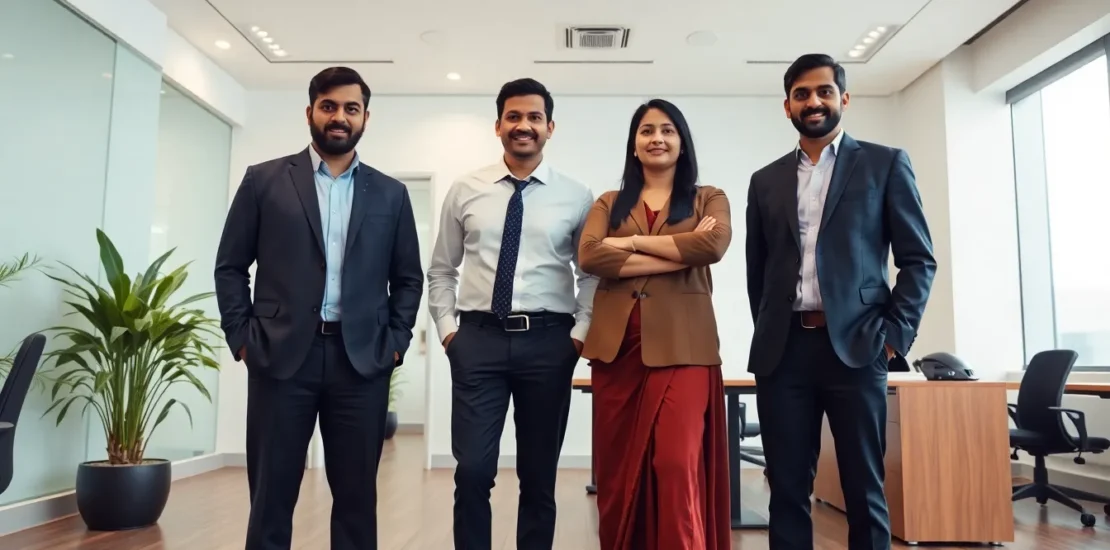
AV solutions for office Bangalore refers to the integrated design, installation, and management of Audio-Visual technology—like video conferencing systems, digital displays, and sound systems—specifically for workplaces in Bangalore. It’s about creating seamless, reliable, and professional communication environments that connect your Bangalore teams with each other and the world, moving beyond just buying hardware to crafting a strategic asset for collaboration.
I walked into a mid-sized SaaS firm in Whitefield last year, and the silence was louder than any server hum. The CEO had called me in, frustrated. “Karthik,” he said, “we invested in top-tier ‘AV solutions for office Bangalore’. Brand-new screens, the best webcams money can buy. But our weekly review with the US team is still a disaster. Someone’s always on mute, the presentation freezes, and half the room can’t hear. We bought boxes, not a solution.” That moment crystallized the entire challenge for me. In a city that runs on global conversations, the gap between purchasing technology and enabling genuine connection is where most Indian businesses, especially in Bangalore, stumble. Your office isn’t just a physical space; it’s your nerve center for communication. And when that nerve center has static, the entire organization feels it.
Bangalore’s unique ecosystem—a blend of global HQs, vibrant startups, and sprawling tech parks—demands more from workplace technology. The shift isn’t just about remote work; it’s about hybrid being the permanent default. Your engineers in Koramangala need to debug code with a team in Berlin in real-time. Your sales leaders in Indiranagar must present to a board in New York without a glitch. The AV system is no longer a utility; it’s the very fabric of your operational integrity. Yet, so many decisions are made reactively, led by flashy product demos rather than a deep understanding of workflow. This guide is that understanding. We’ll move past the specs and dive into what actually makes AV solutions for office Bangalore work for you.
#What Is AV Solutions for Office Bangalore and Why Should Indian Businesses Care?
At its core, AV solutions for office Bangalore is a context-specific strategy. It’s the deliberate orchestration of audio, video, control, and network systems to solve for Bangalore’s distinct challenges: high-ambition global collaboration, dense office layouts that create acoustic nightmares, and the pressure to demonstrate world-class professionalism to international partners and talent. It’s the difference between a projector in a conference room and a unified system that lets your team in Bangalore walk into any space, tap their device, and share content or start a video call as intuitively as sending a WhatsApp message.
Indian businesses should care because our competitive edge is increasingly defined by the quality of our collaboration. For decades, we competed on cost and talent. Now, we compete on seamless integration into global workflows. When a potential client in London experiences a flawless, immersive video conference with your Bangalore team, it signals maturity, reliability, and technological sophistication. It builds trust before a contract is even signed. Conversely, a poor experience—echo, lag, fuzzy slides—unconsciously reinforces outdated stereotypes. Your AV setup is a silent ambassador for your brand’s capabilities.
Furthermore, the war for talent in Bangalore is fierce. The best engineers, designers, and strategists expect a workplace that empowers them, not frustrates them. They’ve experienced seamless tech at global firms. A clunky, unreliable meeting environment is a daily friction point that degrades productivity and morale. Investing in thoughtful AV solutions for office Bangalore isn’t an IT expense; it’s a direct investment in employee experience, retention, and the perceived value of coming into the office. It tells your team that their time and contributions are valued enough to provide them with the best tools to succeed.
#What Are the Biggest Challenges with AV Solutions for Office Bangalore?
The path to effective AV is littered with good intentions and poor outcomes. The first, and most common, challenge is the “Siloed Purchase.” The facilities team buys displays, IT procures laptops and licenses, and maybe the admin team picks the conference phone. None of these systems are designed to talk to each other. You end up with a confusing array of remotes, dongles, and login screens. I’ve seen boardrooms with seven different remote controls. This fragmentation creates a terrible user experience and makes troubleshooting a nightmare where departments point fingers at each other.
Second is the profound underestimation of acoustics. Bangalore offices often feature open plans, glass walls, and hard surfaces—a recipe for audio disaster. You can have a $10,000 camera, but if your team in Marathahalli sounds like they’re speaking from the bottom of a well because of room echo, or if the air conditioner hum drowns out quiet speakers, the communication fails. Audio is 70% of a meeting’s effectiveness. We focus on the visual glamour and neglect the foundational need for crystal-clear sound, which is especially critical for non-native English speakers navigating accents and technical jargon.
Third is the lack of a dedicated management and support strategy. Companies treat AV like furniture—install it and forget it. But these are complex, software-driven systems. Who updates the firmware? Who trains the new hire on how to host a hybrid meeting? Who is the single point of contact when the system in the CEO’s office fails five minutes before a crucial investor call? Without clear ownership and a proactive maintenance plan, even the best-installed system will decay into obsolescence and frustration within a year. The final challenge is future-proofing. Technology evolves rapidly. A solution built only for today’s Zoom calls might not support the immersive metaverse collaboration spaces of tomorrow. Locking into a proprietary, closed ecosystem can leave you stranded.
#How Does a Strong AV Solutions for Office Bangalore Strategy Actually Work?
A strong strategy works by being human-centric first and technology-second. It starts by mapping your actual communication workflows: How do brainstorm sessions *actually* flow between your design studio in Bangalore and your marketing team in Mumbai? What does a client workshop look like? It then designs the technology ecosystem to enable those workflows invisibly. The technology recedes into the background, and the human connection comes to the fore. It’s governed, not just installed, with clear ownership, regular health checks, and a roadmap for evolution.
Here’s a practical comparison of common missteps versus what delivers real ROI:
| What Most Companies Do | What Actually Works |
|---|---|
| Buy hardware per room based on budget and sales demos. | Conduct a needs analysis based on room use-case (huddle, boardroom, all-hands) and user personas. |
| Assume in-house IT can handle installation and integration. | Partner with a specialized AV integrator who understands Bangalore’s infrastructure and can provide a single point of accountability. |
| Provide one-time training during installation. | Implement a continuous “AV Ambassador” program within teams and create a library of short, on-demand video tutorials. |
| Treat audio as an afterthought, focusing on screen size. | Design with acoustics first: use sound masking, strategic microphone placement, and acoustic treatments to ensure speech clarity. |
| Create a complex control system with multiple remotes/apps. | Implement a unified, intuitive touch-panel or BYOD (Bring Your Own Device) control that works the same in every room. |
| No plan for ongoing support or refreshes. | Establish a managed service contract for monitoring, updates, and helpdesk support, with a 3-5 year technology refresh cycle. |
#How to Implement AV Solutions for Office Bangalore Step by Step
1. Audit and Aspire: Don’t start with a product catalog. Start by interviewing teams. Shadow a few meetings. Document the pain points: “We lose 10 minutes every call getting connected,” “Our remote participants feel like second-class citizens.” Simultaneously, define your aspiration. Is it “frictionless global collaboration” or “impress every client who walks in”? This clarity of current pain and future goal is your blueprint.
2. Partner, Don’t Just Purchase: Select an AV integrator in Bangalore as a strategic partner, not a vendor. Look for one who asks about your workflows before showing a product list. They should have deep experience with your industry scale and provide clear references. Their role is to translate your “aspire” phase into a technical design that is scalable, reliable, and within budget.
3. Design for the Experience: Work with your partner to design the user journey. From the moment an employee walks into a room, what happens? A one-touch “Start Meeting” button? Wireless sharing from their laptop? The design must cover acoustics, sightlines (camera angles), lighting, and network requirements (a dedicated VLAN for AV is often crucial). Prototype this experience in a pilot room before full rollout.
4. Governance Before Installation: Before a single cable is pulled, define governance. Who approves change requests? Who is the day-to-day system admin? What is the process for employees to get help? Draft the service level agreements (SLAs) with your integrator for support. This step prevents the system from becoming an orphaned asset.
5. Install with Rigor and Train in Context: Installation should be meticulous, with proper cable management and testing. Training cannot be a one-day event. Conduct role-based training: “Hosting a Hybrid Meeting” for managers, “Joining and Presenting” for all. Use the pilot room as a training ground. Create simple, visual quick-start guides mounted in each room.
6. Launch, Measure, and Iterate: Go live with a phased rollout. Gather feedback aggressively in the first 90 days. Measure what matters: reduction in meeting start-up time, usage rates of different features, and support ticket volume. Use this data to refine training, adjust settings, and validate your ROI. Schedule quarterly business reviews with your integrator.
#What Results Can You Expect from AV Solutions for Office Bangalore?
The results transcend the obvious. Yes, you’ll see metrics: a 40-60% reduction in time wasted on “tech troubleshooting” at the start of meetings. You’ll see higher utilization of your collaboration spaces because people actually want to use them. But the more profound shifts are behavioral and cultural. You’ll notice meetings become more inclusive. Remote participants, whether from another Bangalore office or another continent, can be seen and heard equally. Decision-making accelerates because information is shared flawlessly.
Culturally, it elevates your professional stature. I worked with an automotive R&D firm in Bangalore that implemented a state-of-the-art design review room. Their German counterparts, after the first seamless 3D model review session, commented on the “world-class facility.” That perception translated into greater trust and a more collaborative partnership. Internally, employee frustration plummets. The constant low-grade stress of “will it work?” is eliminated, freeing cognitive bandwidth for actual work. You’ll also see innovation in meeting formats—teams feel empowered to try new workshop styles or client engagement models because the technology is a reliable enabler, not a constraint.
#What Do Experts Say About AV Solutions for Office Bangalore?
Industry thought leaders consistently frame workplace technology as a core component of employee experience and organizational agility. Deloitte’s Global Human Capital Trends reports have long highlighted that the physical workplace must become an “experience platform,” with technology that connects people to their work and each other meaningfully. In the Bangalore context, NASSCOM’s future workplace forums emphasize that India’s IT-BPM sector, in particular, must leverage smart workspace tech to enhance productivity and collaboration in hybrid models, directly impacting service delivery quality and innovation.
McKinsey’s research on the “hybrid work model” underscores that technology is the single biggest factor in making hybrid work productive and equitable. They note that investments must shift from mere connectivity to creating “immersive and inclusive experiences.” This aligns perfectly with the strategic approach to AV solutions for office Bangalore—it’s not about the cable, but about the experience of connection. Furthermore, frameworks like the AVIXA’s (Audiovisual and Integrated Experience Association) Design Standards provide the scientific backbone, offering evidence-based guidelines on everything from viewing distances to microphone coverage, moving the practice from art to a rigorous science that guarantees consistent results.
#Conclusion
That CEO in Whitefield didn’t need a new webcam. He needed a strategy. We redesigned his approach from the ground up, starting with the workflow of that critical US review meeting. We fixed the acoustics, implemented a one-touch control system, and established a managed service contract. Three months later, he told me the meeting was now a non-event—in the best way. The technology vanished, and the focus returned to the work. That’s the goal. In Bangalore’s hyper-competitive landscape, your ability to communicate without friction is a silent, powerful advantage. View your AV solutions for office Bangalore not as a cost, but as the plumbing for your ideas—when it works perfectly, no one notices, but everything flows. The future of work here is hybrid, global, and demanding. Your AV strategy is the foundation on which that future is built.
Frequently Asked Questions About AV solutions for office Bangalore
What is the typical cost range for AV solutions for office Bangalore?
It varies dramatically based on scale and complexity. A basic huddle room can start from ₹2-3 lakhs, a mid-tier conference room from ₹8-15 lakhs, and large all-hands or boardrooms can range from ₹25 lakhs to over ₹1 crore. The key is to budget for the total cost of ownership, including design, integration, and a 10-15% annual provision for managed services and future refreshes, not just hardware.
How long does a typical AV installation project take in Bangalore?
For a standard office fit-out, allow 8-12 weeks from design sign-off to final handover. This includes detailed engineering, procurement, installation, programming, and testing. Phased rollouts across multiple floors or buildings will take longer. Always include a 2-week pilot phase in one room to test the user experience before full-scale deployment.
Can our existing IT team manage these AV systems?
They can oversee them, but deep management requires specialized skills. AV systems converge IT networks, audio engineering, and control system programming. The most effective model is a partnership: your IT team handles network policies and user access, while a dedicated AV integrator provides Level 2/3 technical support, firmware updates, and system health monitoring under a managed service agreement.
What are the most common mistakes to avoid when planning AV solutions?
1. Prioritizing visuals over audio (poor sound ruins meetings). 2. Not allocating a dedicated budget for acoustic treatment. 3. Overlooking the need for a robust, segregated network for AV traffic. 4. Skipping the post-installation training and governance plan. 5. Choosing products in isolation without ensuring they integrate into a seamless, controllable ecosystem.
How do we ensure our AV setup is future-proof?
Future-proofing is about flexibility, not clairvoyance. Choose open-architecture systems (like standard IP-based protocols) over proprietary, locked-in ones. Ensure your infrastructure (cabling, network switches, power) is over-specified to handle higher bandwidths. Design rooms with flexible furniture and easy access to conduits for adding technology later. Partner with an integrator who provides a roadmap for scalable upgrades.
Is wireless presentation technology reliable for corporate use in Bangalore?
Yes, absolutely, but it must be implemented correctly. Enterprise-grade wireless presentation systems (like Barco Clickshare, Kramer VIA) are highly reliable. The critical factor is your office Wi-Fi network. They often require a dedicated, well-configured wireless network or a direct peer-to-peer mode to avoid congestion on your main corporate Wi-Fi. A professional site survey is non-negotiable for reliability.
“You don’t fix attrition with pizza parties. You fix it by making people feel their work matters to someone who matters.”
— Karthik, Founder & Principal Consultant, SynergyScape
Founder & Principal Consultant, SynergyScape | 15+ Years in HR Consulting & Organizational Development across Indian Enterprises
Transform Your Organization Today
Strategic HR Solutions & Corporate Consulting for Indian Enterprises.
Call: 90366 35585 | Email: synergyscape.blr@gmail.com
Related Articles You Might Find Useful
- How Does a Yealink Dealer in Bangalore Tailor Solutions for IT, Healthcare, and Manufacturing?
- What Is a Cisco IP Phone Dealer in Bangalore and How Do You Work With One?
- How Do You Choose the Right Polycom Dealer Bangalore for Your Enterprise?
- What is the Right Conference Room Setup for Your Bangalore Office?
- How Does the Right Office Phone System in Bangalore Differ for IT, Manufacturing, and Healthcare?