
What Is a Cisco IP Phone Dealer in Bangalore and How Do You Work With One?
- April 5, 2026
- Posted by:
- Category: Business Strategy & OD
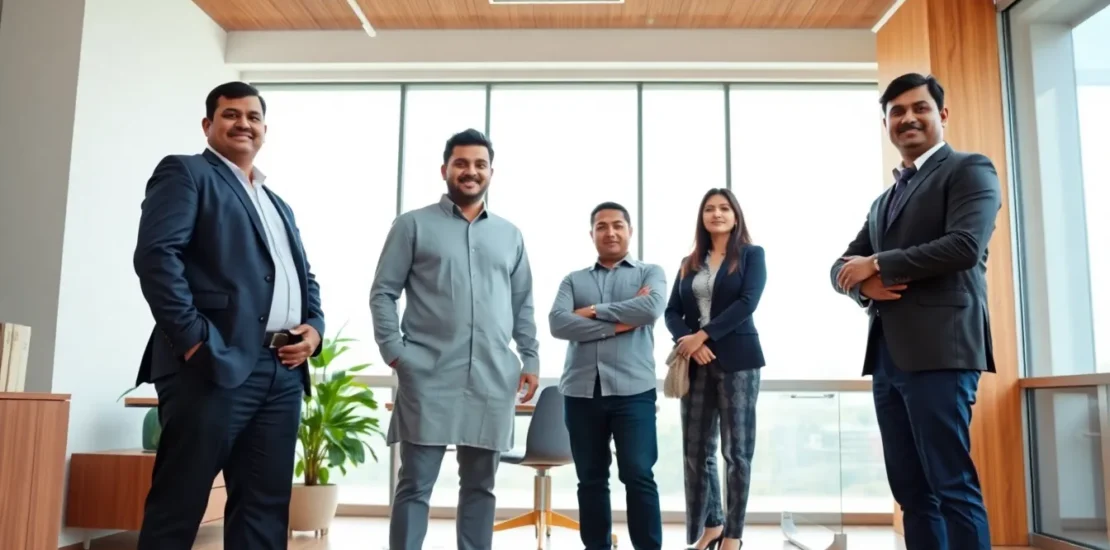
A Cisco IP phone dealer in Bangalore is a specialized local partner authorized to sell, configure, deploy, and support Cisco’s Voice over IP (VoIP) phone systems for businesses. They are your single point of contact for hardware procurement, software licensing, system design, and ongoing technical maintenance, ensuring your business communication is reliable and professional. Think of them as your outsourced telecom department, bridging the gap between Cisco’s global technology and your specific office needs in Bangalore’s unique infrastructure landscape.
Opening: If You’re Reading This, You’re Probably Dealing With…
If you’re reading this, you’re probably dealing with crackling call quality during client pitches, employees struggling with outdated desk phones that can’t connect to your CRM, or the sheer headache of managing separate bills for phones, internet, and mobile lines. You know your business communication is a patchwork of solutions that’s holding you back, and the thought of upgrading to a unified system like Cisco feels overwhelming. You need a local expert—a Cisco IP phone dealer Bangalore—but you’re worried about choosing the wrong partner, facing hidden costs, or ending up with a system your team can’t use. This playbook cuts through the confusion. I’ll give you the exact steps to find, vet, and partner with the right dealer, transforming your business communication from a daily frustration into a competitive asset.
What Exactly Is a Cisco IP Phone Dealer Bangalore? (The No-Jargon Version)
Let’s strip away the tech speak. A Cisco IP phone dealer Bangalore is not just a shop that sells phones. They are your local guide and builder for your office’s entire voice communication system.
Imagine you’re building a house. Cisco manufactures the best-quality bricks, pipes, and wiring (the phones, servers, and software). But you need an architect and contractor who knows Bangalore’s soil, gets the local permits, understands your family’s habits, and builds the house to live in. The dealer is that architect-contractor. They ask: “How many meeting rooms? Do your salespeople work from home? Do you need calls to record for compliance?” Then, they design, supply, and build the system.
Their real value comes *after* the sale. When a new employee joins, the dealer adds a phone remotely. When you open a new branch in Mumbai, they integrate it seamlessly. When there’s a weird echo on Line 3, they fix it. In a market like India, where power fluctuations and internet variability are real issues, a good Bangalore-based dealer pre-builds solutions for these local challenges.
How Do You Know You Need a Better Cisco IP Phone Dealer Bangalore?
Don’t wait for a complete system meltdown. Use this checklist to diagnose your current state. If you tick 3 or more, it’s time to act.
| Warning Sign | What It Actually Means | Urgency Level |
|---|---|---|
| Frequent call drops or poor audio quality during crucial client calls. | Your network isn’t optimized for VoIP, or your existing hardware is failing. This directly impacts revenue and reputation. | HIGH – Act this week. |
| You’re paying for more mobile bills than desk phones because staff find the desk system unreliable. | The system isn’t fit for purpose. You have double the cost and zero control. | MEDIUM – Address in this quarter. |
| Adding a new user or moving a phone takes an IT guy half a day and a site visit. | You lack a centralized management portal. Your system isn’t agile, slowing down business operations. | MEDIUM – Plan within 90 days. |
| Your current “dealer” is just a reseller; for every issue, they say “we need to call Cisco support.” | You have no local technical ownership. Resolution times are in days, not hours. | HIGH – Start evaluating new partners now. |
| You have no idea how to integrate phone calls with your Zoho CRM or Salesforce. | You’re missing out on productivity boosts like click-to-call and screen pops, leaving efficiency on the table. | MEDIUM – Include in your next project. |
| Your system is 5+ years old and cannot support video calls or modern collaboration features. | You are operating with obsolete technology, which may soon become unsupported and a security risk. | HIGH – Plan an upgrade. |
What Is the 90-Day Action Plan for Cisco IP Phone Dealer Bangalore?
This is your execution blueprint. Follow it phase by phase.
Weeks 1-2: Discovery & Shortlisting
* Action 1 (Internal): Form a core team of 3: the decision-maker (you/CEO), the finance head, and the lead IT/ops person. Define your “Why?”—Is it cost reduction, better client experience, or enabling hybrid work?
* Action 2 (Internal): Conduct a simple audit. Count all physical phones, note user locations (HQ, home, other offices), list all current monthly telecom expenses (ISDN, PRI, mobile bills).
* Action 3 (External): Shortlist 3-4 dealers. Use Google (“Cisco authorized partner Bangalore”), ask your network in Bangalore business groups, and check Cisco’s official partner locator. Filter for partners with “Advanced” or “Premier” certifications.
Weeks 3-4: Evaluation & Proposal
* Action 4: Send your audit details to shortlisted dealers. Request a mandatory site survey. A dealer who proposes a solution without seeing your office layout, server room, and network switch is a red flag.
* Action 5: Hold proposal meetings. Your key question: “Walk me through a typical day for my sales head after this system is live.” Listen for understanding of workflows, not just tech specs.
* Action 6: Scrutinize quotes. Ensure they break down: 1) Hardware (phone models, servers), 2) Software Licenses (annual/subscription), 3) Implementation (project fee), 4) AMC (Annual Maintenance Contract). Avoid lump-sum quotes.
Month 2: Selection & Project Kick-off
* Action 7: Check references. Ask for 2 clients similar in size and industry. Call them. Ask: “Were there hidden costs? How fast do they respond to a P1 issue?”
* Action 8: Finalize the partner. Sign a detailed Statement of Work (SOW) that includes timelines, milestones, and penalty clauses for delays.
* Action 9: Kick-off meeting. Define a single point of contact (SPOC) from both sides. The dealer should provide a project plan. Begin any necessary internet bandwidth upgrades.
Month 3: Deployment & Handover
* Action 10: Pilot Phase. Deploy the system for a pilot group (e.g., the sales team) first. Test all features—internal calls, external calls, voicemail, CRM integration.
* Action 11: Training. Insist on two training sessions: one for admins (your IT person) and one for end-users. Record these sessions.
* Action 12: Formal Handover & Go-Live. Get all documentation: network diagrams, admin passwords, license details, and the support contact process. Only then sign off on the final payment.
What Tools and Frameworks Support Cisco IP Phone Dealer Bangalore?
This isn’t just about buying phones; it’s about adopting a new operational framework. Here are practical tools:
1. The Phased Rollout Framework: Never go office-wide on Day 1. Use the pilot group in Month 3 as your testing ground. This contains risk and builds internal advocates.
2. The Total Cost of Ownership (TCO) Calculator: Your dealer should provide this. It should compare your 3-year current costs (CAPEX + OPEX) vs. the new Cisco system (often a shift from CAPEX to OPEX via subscriptions).
3. Unified Communications Manager (UCM) Admin Portal: This is your cockpit. Ensure your admin gets trained on adding users, generating call reports, and managing call routing (like routing calls to mobile after 6 PM).
4. Integration Checklists: For tools like CRM or helpdesk software. This turns your phone from a dialer into a productivity hub.
| Approach | Best For | Watch Out For |
|---|---|---|
| On-Premises (UCM on your server) | Businesses with 100+ seats, high security/compliance needs, stable IT team. | High upfront cost, you manage server upkeep & upgrades. |
| Cloud-Hosted (Webex Calling) | Startups, multi-location businesses, companies wanting minimal IT overhead. Managed by the Cisco IP phone dealer Bangalore or Cisco directly. | Ongoing per-user subscription, requires reliable internet. |
| Hybrid | Businesses transitioning slowly, or with some branches on cloud and HQ on-premise. | Can get complex; needs a highly skilled dealer to manage. |
What Are the Common Pitfalls with Cisco IP Phone Dealer Bangalore?
I’ve seen these mistakes cost time, money, and trust. Avoid them.
Pitfall 1: Choosing on Price Alone. The cheapest quote often means cut corners—using lower-end phone models, skipping the site survey, or offering bare-minimum support. A good Cisco IP phone dealer Bangalore invests in certified engineers and local spare parts. Their price reflects that. I once saw a company save 20% upfront but lose 3 days of business during a failure because their dealer had no local technical staff.
Pitfall 2: Underestimating Network Readiness. VoIP runs on your data network. If your local network is a tangled mess of old switches, adding a high-quality phone system is like putting a Ferrari engine in a car with flat tires. A professional dealer will insist on a network assessment. Ignoring this leads to choppy audio and blame games between your internet provider and the phone dealer.
Pitfall 3: Neglecting the Human Element—Training. You are changing a daily habit for every employee. Without proper, role-specific training, you’ll have low adoption. People will revert to mobiles, and your investment will rot. Mandate that training is a non-negotiable line item in the contract.
Pitfall 4: Vague Support Agreements. An AMC that says “8×5 support” is useless if it doesn’t define response times. You need clear SLAs: e.g., “P1 issue (system down): 1-hour response, 4-hour resolution. P3 issue (single phone down): 4-hour response.” Ensure the support is provided directly by your dealer, not routed through a third-party call center.
How Do You Sustain Cisco IP Phone Dealer Bangalore Long Term?
Your relationship with the dealer shifts from project mode to partnership mode after go-live.
Quarterly Business Reviews (QBRs): Schedule a 30-minute call every quarter with your dealer SPOC. Review: 1) Any recurring issues, 2) Call volume reports (are you missing calls?), 3) Upcoming license renewals, 4) New features Cisco has released that you could use. This turns them from a fixer into a strategic advisor.
Annual Health Check & License Audit: Once a year, have the dealer perform a full system health check. Simultaneously, audit all your software licenses. Cisco often changes licensing models. A proactive dealer will help you optimize, potentially saving money as you grow.
Plan for Evolution: In 18-24 months, technology will advance. Discuss the roadmap. Maybe you’ll need more video devices or AI-powered call analytics. A strong long-term partnership with your Cisco IP phone dealer Bangalore ensures your system evolves with your business, not holds it back.
Conclusion
Transforming your business communication is not a product purchase; it’s a process managed by the right local partner. Start today by conducting the internal audit from Week 1. That single act will clarify your needs and put you in control of conversations with potential dealers. Remember, the goal is not to become a telecom expert, but to find one you can trust. A truly capable Cisco IP phone dealer Bangalore will act as an extension of your team, providing not just technology, but the reliability and agility your business needs to sound professional and operate efficiently every single day.
FAQ
Frequently Asked Questions About Cisco IP phone dealer Bangalore
What’s the typical cost range for a Cisco IP phone system from a dealer in Bangalore?
Costs vary widely based on scale and model. For a 50-user setup, expect an initial investment (phones, basic licensing, implementation) starting from ₹8-10 lakhs for an on-premise system. Cloud-based options (Webex Calling) have lower upfront costs (just phones) but a monthly subscription of ₹1,000 – ₹2,500 per user. Always get a detailed, itemized quote.
How long does a typical deployment take?
For a standard office of 50-100 users, plan for 4-6 weeks from signed agreement to full go-live. This includes network preparation, hardware delivery, configuration, pilot testing, and training. Rushing this process is the biggest cause of post-launch issues.
Can a Cisco IP phone system work with our existing analog devices like fax machines or EPABX?
Yes, but it requires additional hardware called Analog Telephone Adapters (ATAs). A competent dealer will identify this during the site survey and include the necessary ATAs in the proposal to ensure all your legacy devices are integrated.
What happens if our internet goes down? Will the phone system stop working?
A well-designed system has fail-safes. For cloud-based systems, calls can be automatically re-routed to mobile phones. For on-premise systems, internal calls between offices on the same network often keep working, and calls can failover to a secondary internet connection or a PRI line. Discuss redundancy options with your dealer.
We have remote employees across India. Can they be included?
Absolutely. This is a key strength of VoIP. Remote users can use a physical Cisco IP phone at home (connected to your system via VPN), or use the softphone app (Webex App) on their laptop/mobile to make and receive calls as if they were at their office desk in Bangalore.
How do we ensure we’re getting genuine Cisco hardware and licenses?
Only work with Cisco Authorized Partners. Ask for their partner certification level (Specialist, Advanced, Premier). Genuine products have a serial number that can be verified on Cisco’s website. Your dealer should provide all Certificate of Authenticity (CoA) documents for software licenses.
“Every organization I’ve walked into that was struggling had one thing in common: broken feedback loops between leadership and frontlines.”
— Karthik, Founder & Principal Consultant, SynergyScape
Founder & Principal Consultant, SynergyScape | 15+ Years in HR Consulting & Organizational Development across Indian Enterprises
Transform Your Organization Today
Strategic HR Solutions & Corporate Consulting for Indian Enterprises.
Call: 90366 35585 | Email: synergyscape.blr@gmail.com
Related Articles You Might Find Useful
- How Do You Choose the Right Polycom Dealer Bangalore for Your Enterprise?
- What is the Right Conference Room Setup for Your Bangalore Office?
- How Does the Right Office Phone System in Bangalore Differ for IT, Manufacturing, and Healthcare?
- What Is EPABX System Bangalore? A 90-Day Implementation Playbook
- Is Your Organization’s Communication Secure? A Data-Driven Guide to Intercom System Installation Bangalore