
Data Storage Solutions for Business: A Complete Corporate Guide
- February 18, 2026
- Posted by:
- Categories: Business plans, Competitive research
Quick Answer
The right data storage solutions for business are foundational to operations, security, and growth. Your primary options are:
- On-Premise Storage: Physical hardware (like NAS or SAN) you own and manage on-site. Best for high control, low latency, and strict compliance needs.
- Cloud Storage: Services (like AWS S3, Azure Blob) provided over the internet. Offers scalability, reduced upfront cost, and remote access.
- Hybrid Storage: A blend of on-premise and cloud, providing flexibility, allowing you to keep sensitive data local while leveraging cloud scalability for other workloads.
The optimal choice depends on your data volume, access speed requirements, budget, and regulatory environment. For most modern businesses, a hybrid or multi-cloud strategy is becoming the standard.
Why Your Choice of Data Storage Matters More Than Ever
In today’s digital economy, data isn’t just an asset; it’s the lifeblood of your organization. From customer records and financial transactions to intellectual property and real-time analytics, how you store, protect, and access this information directly impacts your agility, security, and bottom line. Outdated or mismatched data storage solutions for business can lead to crippling downtime, compliance failures, and an inability to leverage insights for competitive advantage. This guide will navigate you through the evolving landscape, helping you architect a storage strategy that is resilient, scalable, and aligned with your business objectives.
Understanding the Core Types of Data Storage Solutions
The market offers a spectrum of technologies, each with distinct advantages. Understanding these core models is the first step in making an informed decision.
1. On-Premise Storage Solutions
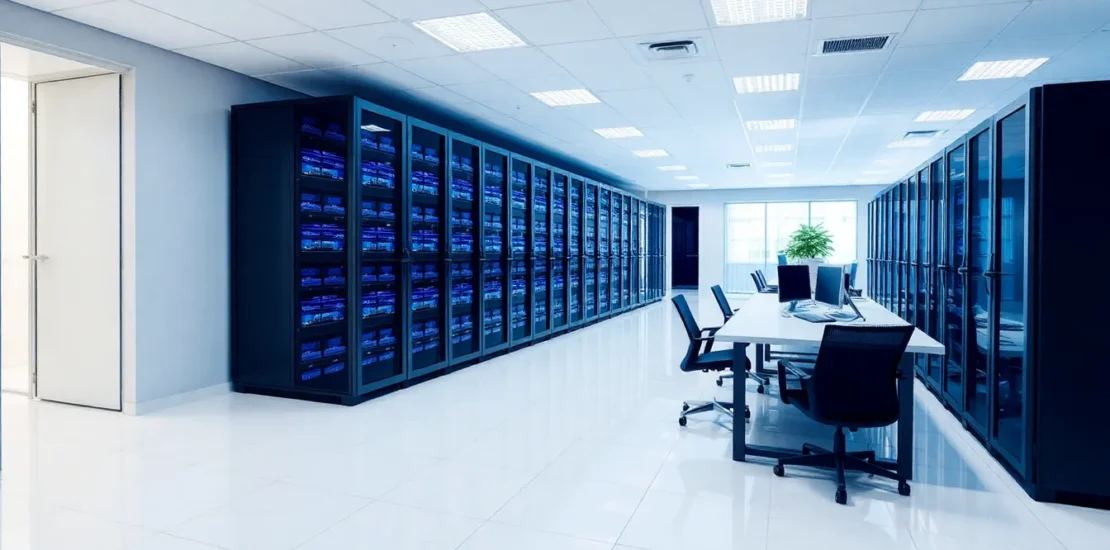
On-premise (or on-prem) storage involves deploying physical hardware—servers, disk arrays, tape libraries—within your own data center or office. You have complete ownership, control, and responsibility for the infrastructure.
- Direct-Attached Storage (DAS): Storage devices (like hard drives) directly connected to a single server. It’s simple and low-cost but offers poor scalability and data sharing.
- Network-Attached Storage (NAS): A dedicated file-level storage device connected to a network, allowing multiple users and clients to access data from a centralized location. Ideal for file sharing and collaborative work.
- Storage Area Network (SAN): A high-speed, dedicated network that provides block-level storage to servers. SANs offer superior performance, scalability, and reliability for mission-critical applications like databases.
Best for: Organizations with stringent data sovereignty requirements, those needing ultra-low latency (e.g., high-frequency trading), or with existing significant capital investment in data center infrastructure.
2. Cloud Storage Solutions
Cloud storage delivers storage capacity as a service over the internet, managed entirely by a third-party provider. You pay for what you use, typically on a subscription basis.
- Public Cloud: Services like Amazon Web Services (AWS) S3, Microsoft Azure Blob Storage, and Google Cloud Storage. They offer massive scalability, global accessibility, and built-in redundancy.
- Private Cloud: Dedicated cloud infrastructure built for a single organization, either managed on-premise or hosted by a provider. It offers more control and customization than public cloud while maintaining a cloud-like model.
- Object Storage: The dominant architecture in cloud, which manages data as objects (with metadata) rather than in file hierarchies. It’s exceptionally scalable and cost-effective for unstructured data like media files, backups, and logs.
Best for: Businesses seeking rapid deployment, elastic scalability, reduced IT overhead, and disaster recovery solutions without large capital expenditure.
3. Hybrid and Multi-Cloud Storage
This modern approach combines the best of both worlds. A hybrid model integrates on-premise infrastructure with cloud services, often using orchestration software for seamless data movement. A multi-cloud strategy uses services from two or more public cloud providers to avoid vendor lock-in and optimize costs and performance.
These strategies represent the cutting edge of data storage solutions for business, providing unparalleled flexibility. You might keep active, sensitive workloads on-premise while using the cloud for archival, backup, or bursting during peak demand periods.
Comparison: Traditional vs. Modern Data Storage Approaches
| Aspect | Traditional (On-Premise Focus) | Modern (Cloud & Hybrid Focus) |
|---|---|---|
| Cost Model | High Capital Expenditure (CapEx) for hardware, software, and space. Ongoing operational costs for power, cooling, and staff. | Operational Expenditure (OpEx) with pay-as-you-go pricing. Low to no upfront cost, shifting capital to operational budgets. |
| Scalability | Manual, physical scaling. Requires forecasting, purchasing, and installing new hardware, leading to periods of under or over-provisioning. | Elastic and instant. Scale up or down programmatically via an API, often with no downtime, matching resources exactly to demand. |
| Management & Maintenance | Requires dedicated in-house IT team for setup, patching, upgrades, and troubleshooting. | Managed by the cloud provider. Your team manages data and access policies, not the physical infrastructure. |
| Accessibility | Typically limited to the corporate network or via complex VPN setups. Remote access can be a challenge. | Global access from any internet-connected device, enabling remote work and geographically distributed teams. |
| Disaster Recovery | Expensive and complex to set up, requiring a duplicate secondary data center. | Built-in as a service. Providers offer geographically redundant storage, making robust DR achievable for businesses of all sizes. |
Key Factors in Choosing the Right Solution for Your Business
Selecting among the various data storage solutions for business requires a strategic assessment of your specific needs.
Performance and Latency Requirements
Does your business rely on real-time analytics, high-performance computing, or transactional databases? These demand low-latency storage like high-end SAN or local SSDs. For less time-sensitive data like email archives or compliance records, lower-cost, higher-latency cloud object storage may be perfect.
Security and Compliance Mandates
Industries like healthcare (HIPAA), finance (SOX, PCI-DSS), and the public sector have strict data governance rules. You must ensure your storage solution—whether on-prem, cloud, or hybrid—provides the necessary encryption (at-rest and in-transit), access controls, audit trails, and geographic data residency features.
Scalability and Future Growth
Project your data growth over the next 3-5 years. A solution that fits today but can’t scale economically will become a bottleneck. Cloud-native solutions excel here, but modern hybrid arrays also offer non-disruptive expansion capabilities.
Total Cost of Ownership (TCO)
Look beyond the sticker price. For on-premise, factor in hardware refresh cycles, software licenses, power, cooling, physical security, and FTEs for management. For cloud, model ongoing subscription fees, data egress charges (cost to retrieve data), and API request costs. The most cost-effective data storage solutions for business align cost directly with value and usage.
Disaster Recovery and Business Continuity
Your storage strategy is central to your DR plan. Modern solutions should enable automated, frequent backups and facilitate fast recovery point (RPO) and recovery time (RTO) objectives. Cloud storage has democratized enterprise-grade DR, but hybrid models can also create efficient, tiered recovery systems.
Implementing and Managing Your Storage Strategy
Choosing a solution is just the beginning. Effective implementation and ongoing management are critical.
- Data Classification: Start by categorizing your data based on sensitivity, access frequency, and regulatory requirements. This informs where and how you store it (e.g., hot tier vs. archive tier).
- Lifecycle Policies: Automate the movement of data between storage tiers as it ages. Move old project files from expensive high-performance storage to cheaper archival storage after a set period.
- Unified Management Tools: In hybrid environments, use cloud management consoles and on-premise hyper-converged infrastructure (HCI) software to get a single pane of glass for monitoring and control.
- Vendor Evaluation & SLAs: For cloud and managed services, scrutinize the Service Level Agreement (SLA) for guarantees on uptime, durability, and support responsiveness.
The Future of Business Data Storage
The evolution of data storage solutions for business continues to accelerate. Trends like edge computing (processing and storing data closer to its source), the increasing adoption of AI for data management and tiering, and the rise of sustainable, energy-efficient data centers are shaping the next generation of solutions. Furthermore, technologies like immutable storage (for ransomware protection) and unified data fabrics that abstract underlying storage complexity will become mainstream. Staying informed on these trends will ensure your storage infrastructure remains a catalyst for innovation, not a constraint.
Conclusion: Building a Foundation for Success
There is no one-size-fits-all answer. The optimal data storage architecture for your business is a strategic blend of technology, aligned with your unique operational demands, risk profile, and growth trajectory. By thoroughly evaluating your performance, compliance, and cost requirements against the landscape of on-premise, cloud, and hybrid models, you can build a resilient, efficient, and scalable data foundation. Remember, your choice of data storage solutions for business is a critical investment in your organization’s future agility and security. Approach it not as an IT procurement, but as a core business strategy.
— Karthik
Transform Your Organization Today
Strategic HR Solutions & Corporate Consulting for Indian Enterprises.
Call: 90366 35585 | Email: synergyscape.blr@gmail.com