
Fortinet Partner in Bangalore: Sizing FortiGates Right
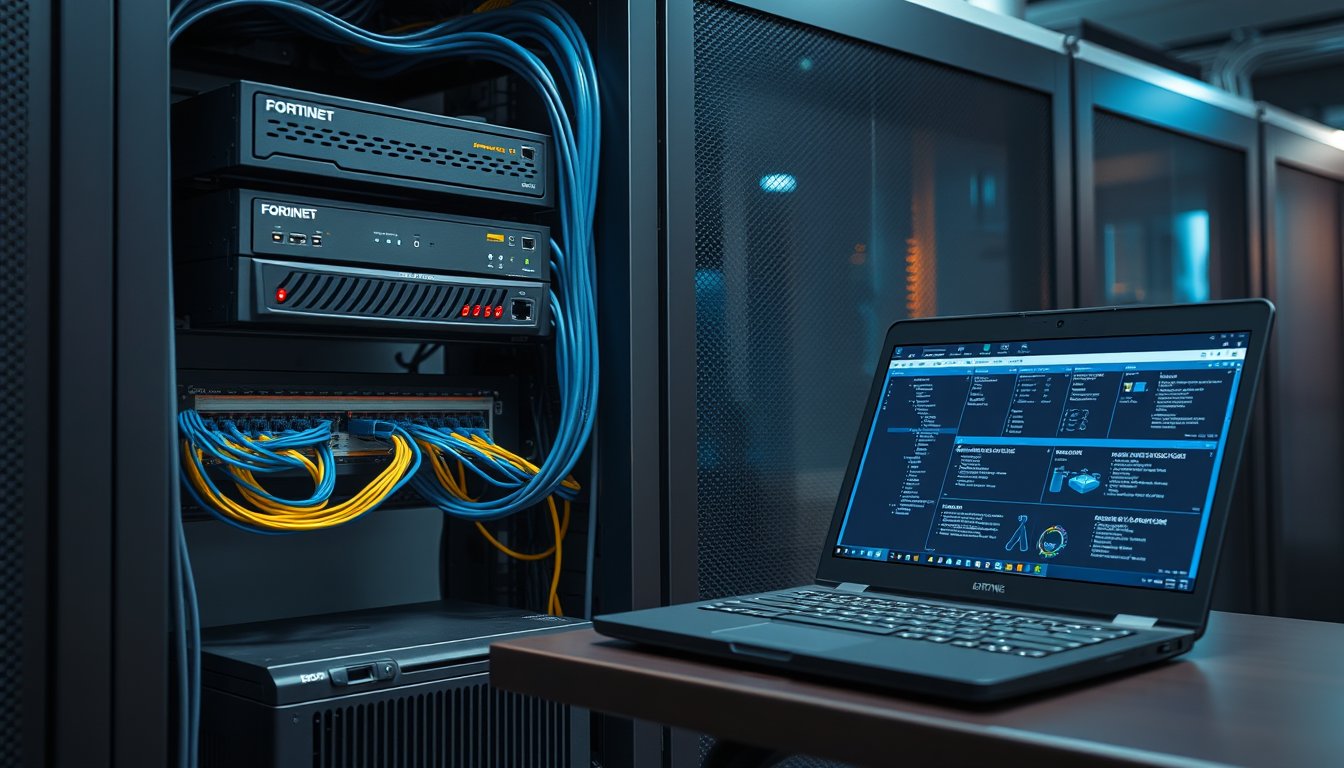
A 200-user office, a 60F, and a Tuesday morning that went badly
In March 2025 we were called to an office off Old Airport Road. 180 staff, two internet links, a FortiGate 60F bought in 2022 on the advice of a reseller who quoted "600 Mbps firewall throughput" and stopped reading. By 10:40 on a Tuesday the finance team could not open Tally over the WAN, the CCTV NVR was dropping frames, and the MD's Teams calls were breaking every ninety seconds.
We logged into the box. CPU was pinned at 99% on one core. The session count was 41,000 against a rated ceiling of 50,000. SSL inspection was off, IPS was in monitor-only mode, and application control was technically licensed but disabled because "it slowed things down" when it was switched on in 2023. In other words: the firewall was doing almost none of the work it was bought to do, and it was still choking.
The fix was not a config change. It was a FortiGate 200G plus a FortiSwitch 424D for the LAN core and a FortiAP 231F rollout for the two floors that had been on consumer Wi-Fi. Total hardware and licensing: ₹4.1 lakh plus GST. Labour and cutover: ₹38,000. The 60F went to a 25-user branch office where it is genuinely well-matched.
That is the whole problem with FortiGate buying in Bangalore in one story. The datasheet number on the box is not the number you will get. And the person quoting you usually does not know which number to read.
If you are searching for a Fortinet partner in Bangalore, the differentiator is not the partner badge. It is whether the person sizing your firewall understands which of the five throughput figures on the Fortinet datasheet applies to your traffic. This article is about how to do that, what licensing actually costs in 2026, and where the Security Fabric earns its keep — and where it does not.
For context on how this fits alongside the rest of a site security build, our security and surveillance services page covers the physical side.
The five throughput numbers on every FortiGate datasheet
Fortinet publishes several figures for each model. They are all true. They measure different things, and the gap between the top and bottom figure on a single box can be a factor of fifteen.
Firewall throughput (1518-byte UDP). This is the headline number. It is measured with large packets, no inspection, no logging, no NAT complexity. It is close to meaningless for a real office.
Firewall throughput (512-byte UDP). Slightly more honest, still no inspection.
IPsec VPN throughput. Relevant if you run site-to-site tunnels. Measured with specific packet sizes and no UTM. Your real VPN throughput will be lower, especially with multiple tunnels and IKEv2 rekeying.
Threat protection throughput. This is the number that matters most. It is measured with firewall, IPS, application control, and malware inspection all enabled, using a realistic traffic mix. Roughly 25-40% of the headline firewall figure for most desktop-class FortiGates.
SSL inspection throughput. The number that matters most in 2026. Over 90% of business traffic is TLS-encrypted. If you are not inspecting it, your IPS and application control are blind to most of what crosses the wire. SSL inspection throughput on a 60F is quoted at 200 Mbps; on a 200G it is 2.6 Gbps. That is a thirteen-fold difference between two models that sit two tiers apart.
The one you should size on, for a typical Indian SME office, is the lower of threat protection and SSL inspection, then apply a 60% utilisation ceiling because you want headroom for peak hour and for the next firmware release, which is always heavier than the last.
A worked sizing example
A Bangalore office with 120 staff. Typical working set: 60 concurrent users on Teams calls, 40 on SaaS apps through the browser, 15 on a Tally or ERP server over the LAN, 8 IP cameras being viewed remotely, one 200 Mbps primary ISP link and a 100 Mbps backup.
Peak inspection load: approximately 180 Mbps of TLS sessions plus 40 Mbps of known-good traffic. Add 30% headroom for a firmware upgrade cycle and a conference room full of video. Call it 290 Mbps of SSL inspection need.
The FortiGate 90G quotes 1.2 Gbps SSL inspection throughput. The 70G quotes 570 Mbps. Either would work; the 90G gives you room to add a second ISP and grow to 200 staff without a forklift. The 50G at 310 Mbps would sit at 93% utilisation on a bad day — that is a box you will be replacing in eighteen months.
Most Bangalore resellers will quote the 50G here because it is cheaper and they are paid on deal size, not on whether your finance team can file returns on the 5th.
Current FortiGate models and what they are actually for
This is 2026 pricing, ex-GST, for hardware plus a three-year 24x7 FortiCare and Unified Threat Protection bundle. Prices move; treat these as the ranges you should expect from a registered Fortinet partner in Bangalore, not as a quote.
| Model | SSL inspection throughput | Threat protection throughput | Typical fit | 3-yr bundle price (2026) |
|---|---|---|---|---|
| FortiGate 50G | 310 Mbps | 600 Mbps | Branch office, 10-25 users, single ISP | ₹68,000-₹92,000 |
| FortiGate 70G | 570 Mbps | 1.1 Gbps | Small office, 25-60 users, light WAN | ₹1.1-1.5 lakh |
| FortiGate 90G | 1.2 Gbps | 2.4 Gbps | Mid office, 60-150 users, dual ISP, HA-capable | ₹2.0-2.7 lakh |
| FortiGate 120G | 1.9 Gbps | 3.6 Gbps | 100-250 users, multi-site hub | ₹3.6-4.8 lakh |
| FortiGate 200G | 2.6 Gbps | 5.0 Gbps | 200-500 users, DC edge, VPN concentrator | ₹5.5-7.2 lakh |
| FortiGate 400F | 7.0 Gbps | 10 Gbps | Campus edge, 500-1500 users | ₹14-19 lakh |
A few blunt observations from having installed all of these:
The 40F and 60F are still on shelves and still get quoted. The 40F is a branch appliance in 2026, not a head-office appliance. It handles a 15-person sales office fine. It handles nothing else fine. Anyone quoting a 40F for a 100-user head office either does not understand SSL inspection or is hoping you do not.
The 90G is the sweet spot for most Bangalore SMEs between 60 and 150 users. It has enough ports, it supports HA with a second unit, and it will not need replacing before 2030.
The 120G and above become relevant when you are terminating more than twenty IPsec tunnels, or when you are doing east-west inspection between internal VLANs. If you are not doing either of those, a 90G with proper segmentation will beat a badly configured 120G every time.
What about 100G FortiGates and carrier-grade models?
You do not need them. If you are reading this article to size a firewall for an Indian SME or mid-market office, the 600F, 900G, and above are priced for service providers and data centres. If a partner is pushing a 900G at you for an office network, ask them to justify it in session counts and IPS throughput numbers. They usually cannot.
FortiCare and FortiGuard: what you are actually buying
This is where Fortinet pricing gets muddy and where Bangalore buyers get into trouble most often. There are two separate support-and-services tracks and they bundle in different ways depending on which SKU the partner pulls.
FortiCare is Fortinet's hardware and software support. It covers firmware updates, RMA, and technical support with defined response SLAs. Tiers are 8x5 Next Business Day, 24x7, and 24x7 Enhanced. For a head-end firewall in a Bangalore office, buy 24x7. For a branch office that can survive until morning, 8x5 NBD is defensible and much cheaper.
FortiGuard is the threat intelligence layer: IPS signatures, application control signatures, antivirus definitions, web filtering categories, DNS filtering, and inline sandboxing. Without FortiGuard, the FortiGate is a competent router with a firewall policy engine. It will not catch much.
The combined bundle is usually sold as Unified Threat Protection (UTP), which stacks IPS, AV, application control, web filtering, and FortiCare 24x7 into one SKU. There is also Enterprise Protection, which adds inline sandboxing and CASB. And ATP, which bundles sandboxing but drops web filtering.
A worked comparison for a single FortiGate 90G, three-year term, 2026 pricing:
| Bundle | What is included | 3-year price for a 90G |
|---|---|---|
| FortiCare 8x5 NBD only | Hardware + firmware support, no threat feeds | ₹18,000-₹24,000 |
| FortiCare 24x7 | Hardware + firmware, round-the-clock SLA | ₹38,000-₹52,000 |
| UTP | IPS, AV, App Control, Web Filter, FortiCare 24x7 | ₹1.4-1.8 lakh |
| Enterprise Protection | UTP + inline sandbox + CASB | ₹2.1-2.6 lakh |
| ATP | IPS, AV, App Control, sandbox, FortiCare 24x7 | ₹1.7-2.2 lakh |
What you should actually buy
For 90% of Bangalore SMEs, UTP is the right answer. You get the threat feeds that make the firewall worth owning, 24x7 support, and firmware updates. Sandboxing is useful if you handle sensitive client data or you are in a regulated sector. For most, the inline sandbox adds ₹60,000-₹90,000 over three years to catch attacks that your endpoint EDR will catch anyway.
Be careful of one thing: some Bangalore resellers quote FortiCare separately as if it is an add-on and then hide the threat feeds in a "bundle" line item priced vaguely. Ask for the SKU. Fortinet SKUs are public. FC-10-FG90G-809-02-36 is a defensible line item; "security services" is not.
When Fortinet is the wrong choice
We sell and install Fortinet, and it is not the right product for every office in Bangalore.
If you have fewer than 25 users on a single flat network, a FortiGate 50G is overkill. A Zyxel or a properly configured pfSense on a mini-PC will do the job for ₹25,000 with no subscription. Yes, you give up the threat feeds and the single pane of glass, and yes, that is a real trade-off. But if you are paying ₹90,000 for a firewall when your entire IT budget is ₹4 lakh a year, the money is better spent on endpoint protection.
If your team has zero appetite for FortiOS configuration and you will not pay for a managed service, look at a cloud-delivered option like Cisco Umbrella or Zscaler. You lose on-prem control and you pay per user forever, which is worse for a stable headcount. You win on zero maintenance.
And if you are running FortiGate in a pure SD-WAN capacity across fifteen branches and you already live in the Fortinet ecosystem, do not go elsewhere to save ₹40,000 per branch. The Fabric integration is worth more than the delta.
Security Fabric: what it actually does for a multi-site Bangalore business
Security Fabric is Fortinet's own word for what happens when FortiGate, FortiSwitch, FortiAP, FortiManager, FortiAnalyzer, FortiClient, and FortiNAC are configured to see each other and share context. In a single-office deployment the benefit is modest. In a five-site deployment in Bangalore, it is the difference between two engineers managing the network and one engineer managing the network.
The specific Fabric features that matter in practice:
Security rating and audit. FortiGate continuously checks its own config against a hardening baseline. You get a score out of 100. Any config drift shows up. This is the single most useful Fabric feature and it is often overlooked because it does not sit behind a marketing bundle.
Automatic segmentation via FortiSwitch and FortiAP. When a device is quarantined on the FortiGate, FortiSwitch can move that port to a quarantine VLAN automatically. Without Fabric, your helpdesk has to find the switchport and shut it manually — usually within a five-minute window before the malware spreads.
Single-pane log correlation. FortiAnalyzer takes logs from every device and correlates them. If a FortiAP reports a rogue SSID and a FortiGate reports a client connecting to that SSID later, FortiAnalyzer flags the sequence. No other vendor does this as cleanly across firewalls and access points.
Centralised policy via FortiManager. If you have more than four sites, managing policy on each FortiGate individually is a slow death. FortiManager lets you push a policy change to all five sites in one click and roll it back if it breaks something.
| Sites | Fabric stack that makes sense | 2026 capex |
|---|---|---|
| 1 office | FortiGate only | ₹2.0-2.7 lakh |
| 2-3 offices | FortiGate at each + FortiManager-VM | ₹5.8-7.4 lakh |
| 4-10 sites | FortiGate + FortiManager + FortiAnalyzer-VM | ₹9.5-14 lakh |
| 10+ sites or branches | Full Fabric with FortiSwitch and FortiAP at branches, FortiNAC at HQ | ₹22-38 lakh |
Notice that FortiManager and FortiAnalyzer come as a VM if you want them cheap. A FortiManager-VM licence for 10 devices is roughly ₹1.4 lakh for three years. A FortiManager hardware appliance is ₹3.8 lakh and needs rack space you probably do not have. For 80% of Bangalore mid-market, the VM is the right call.
ISP lead times and link redundancy in Bangalore
The firewall sizing conversation is inseparable from ISP provisioning in Bangalore. Two numbers to keep in mind in 2026:
- New leased line from Airtel, Jio, or Tata: 12 to 28 working days, depending on whether fibre already reaches your building. If your building is in a BDA or BBMP-approval bottleneck, add two weeks.
- Additional IP addresses from the incumbent ISP: 5 to 15 working days.
These matter because when you deploy a dual-WAN FortiGate for the first time, you will often find the second ISP link does not arrive on the day the firewall does. Build the deployment plan around the slower of the two dates, not the faster.
We usually design FortiGate SD-WAN on two links from two different carriers. Airtel plus ACT is a common pairing in Bangalore. Two Airtel links into the same PoP share fate and will both fail during the same fibre cut.
If you are in an area with marginal power reliability — and there are still pockets of Bengaluru where this is true, especially on the older industrial estates — size your UPS for the FortiGate plus the primary switch plus the modem, not just the FortiGate. Fifteen minutes of runtime is enough to ride out a short outage and let the secondary ISP take over.
The failure story worth reading twice
A four-site educational group in Bangalore. Main campus off Bannerghatta Road, three satellite campuses in South Bangalore. They had a FortiGate 100F at the main campus and FortiGate 60E units at the satellites, all under a single FortiManager instance running on an old HP server in the main server room. FortiAnalyzer on the same server, sharing the same disk.
In June 2025, one of the satellite FortiGates started dropping connections to the ERP. The IT team's response was to swap the unit, which took the satellite offline for four hours and did not fix the problem. The actual cause was a FortiManager push of a policy change from two days earlier that had rolled out to one unit due to a firmware mismatch.
FortiAnalyzer could have shown the change and its timestamp in about a minute. It did not, because the disk had filled on the shared appliance — FortiAnalyzer's retention had quietly been set to seven days, and the logs from two days earlier were still there but the query UI was so slow (spinning disk, 100 users querying) that nobody had patience for it.
Cost: one full working day lost across four campuses, roughly ₹1.8 lakh in staff time and productivity, plus ₹70,000 to bring in an external engineer to rebuild the FortiManager policy set. Fix: FortiAnalyzer moved to a dedicated SSD-backed VM, retention increased to 90 days, FortiManager policy changed to a staged rollout that requires manual approval per device group.
The lesson is not that Fortinet is fragile. It is that Fabric features only work if the infrastructure under them is sized properly. A FortiAnalyzer running on the same spinning disks as your file server will fail you at 3 AM when you actually need it.
The Bangalore partner question nobody asks
When you call a Fortinet partner in Bangalore, most of the conversation is about price and the model number. The questions that actually determine whether your deployment succeeds are different.
1. Who is doing the config? Fortinet distributors in Bangalore (Redington, Ingram Micro, and a handful of specialists) supply hardware to dozens of partners. Very few of those partners employ a NSE 4 certified engineer. Ask to see the certification. Ask who specifically will touch your FortiGate on cutover night.
2. What is the post-deployment SLA? This is the one that matters after month three. If something breaks at 9 PM on a Saturday, does your partner answer? Is it a FortiCare escalation or do they do first line? Get it in writing as a specific response time.
3. What is the change management process? If your partner will make policy changes on your FortiGate without a change request, you have a problem. The number of incidents caused by an unannounced, well-intentioned config push is larger than the number caused by external attackers, at least in SMEs.
4. Can they show you a reference in your industry and your size band? A partner with strong BFSI references may still be hopeless for a 60-user logistics office. The use cases are different.
5. Are they reselling or supporting? There is a category of Bangalore reseller that buys Fortinet through distribution, invoices you, and then hands over to the distributor's TAC for support. You are paying an intermediary margin for nothing. Know which one you are talking to.
What sizing looks like in a real SynergyScape deployment
We recently completed a two-site deployment for a Bangalore manufacturer — a head office in Peenya with 145 staff and a smaller sales office in Electronic City with 30. They came to us after a ransomware scare in January 2026 that had been halted by CrowdStrike Falcon on an endpoint but had exposed a flat network and no east-west inspection.
What we designed:
- FortiGate 200G at head office, single unit, no HA because the business can tolerate a four-hour hardware failure with a FortiCare 4-hour RMA and a hot spare in the rack.
- FortiGate 70G at the sales office, HA pair, because the sales team loses revenue on a down day.
- FortiSwitch 424D at head office for the LAN core, four FortiSwitch 108F units at the edge, so ports can be quarantined by the FortiGate.
- FortiAP 231F units — 12 at head office, 4 at sales office — with FortiGate-managed SSIDs.
- FortiManager-VM for both sites, FortiAnalyzer-VM with 1 TB SSD and 90-day retention.
- UTP bundle on both FortiGates, Enterprise Protection on the 200G only.
Total project cost: ₹16.4 lakh ex-GST. Delivery timeline: 6 weeks from PO, including ISP changes and cabling of the new switch drops. The 200G at head office peaks at 38% SSL inspection utilisation during business hours, leaving headroom for the next two years of staff growth.
This is not the cheapest way to do a two-site network in Bangalore. It is the way that survives the ransomware attempt you have not had yet.
If you are working through the same decision, the fastest path is a sizing conversation based on your actual traffic rather than your headcount. Our team handles this as part of the broader security and surveillance engagements we do in Bangalore, or you can book a scoping call and we will size it with you on a screen share.
Fortinet licensing gotchas specific to Indian buyers
A short list of things that catch Bangalore finance and IT teams off-guard.
Multi-year licensing is cheaper but a commitment. A three-year UTP bundle is 25-35% cheaper per year than annual renewals. If you are certain the FortiGate stays for three years, lock it in. If you might upgrade the hardware in eighteen months, buy annual and pay the premium.
Licence entitlement follows the serial number, not the invoice. If your partner delivers a FortiGate with a licence already activated to their own FortiCloud account, you own the hardware and rent the licence from them forever. Insist that licences are registered to your FortiCloud account at handover, with screenshots.
GST treatment. Hardware is 18% GST. Software licences are also 18% GST in the SaaS/cloud category. If your partner quotes an all-in figure and then splits GST at some other rate, question it. Input credit on 18% GST is fully recoverable for most businesses, which changes the effective cost by a meaningful amount.
CERT-In obligations. If you are a service provider, an intermediary, or an entity in certain regulated sectors, CERT-In's 2022 directions require you to report cyber incidents within six hours and to maintain logs for 180 days within India. A FortiAnalyzer with 180-day retention and India-region storage is the cheapest way to meet the log retention clause. Factor that into sizing — 180 days of logs from a busy office runs to several hundred GB.
DPDP Act obligations. If your FortiGate is doing web filtering or DPI on employee traffic, and you are logging it, you are processing personal data under the DPDP Act. You need a stated purpose, a retention period, and a way to delete individual records on request. This is not hard to do — it is a one-page config note — but it is not yet common in Bangalore deployments. Ask your partner about it.
Renewal timing: the annual Fortinet bill most offices forget
Every FortiGate you own will send a renewal invoice once every one, three, or five years. Bangalore offices routinely get blindsided by these because they arrived as an email to an IT generalist who has since left, or as a distributor invoice that never made it to finance.
A worked renewal for a three-year-old FortiGate 100F, still in service at a Bangalore office of 90 staff:
| Renewal item | Annual cost (2026) |
|---|---|
| FortiCare 24x7 | ₹25,000-₹34,000 |
| Unified Threat Protection add-on | ₹42,000-₹58,000 |
| FortiManager-VM (10-device) | ₹38,000-₹52,000 |
| FortiAnalyzer-VM storage uplift | ₹18,000-₹26,000 |
| Total annual | ₹1.23-1.7 lakh |
The trap: if you lapse the UTP, you lose the threat feeds immediately and cannot re-enable them without a new purchase order. Some Bangalore partners quote the renewal at list price with no partner discount, because the buyer has no competing quote and no idea that partner discount exists. Always get two renewal quotes before you pay.
Firmware, patching, and the upgrade window
FortiOS releases P and Q-train patches on a rolling basis. Some of these patches fix actively-exploited vulnerabilities. CVE-2024-21762 and CVE-2022-42475 are two examples from the last few years that were used against Indian offices.
The correct policy for a Bangalore SME in 2026:
- Subscribe to the Fortinet PSIRT advisory feed (or have your partner do it for you).
- Apply critical security patches within 30 days of release, tested on a staging unit first.
- Apply feature upgrades (major version changes) only after the release has been out for at least 60 days and is on a mature patch level.
One important caveat: performance on FortiGate can drop by 5-15% after certain major version upgrades, because FortiOS adds inspection depth. If you sized your box at 95% utilisation when you bought it, the upgrade will take you offline during business hours. Another reason to build headroom.
FAQ
How much does a FortiGate cost in Bangalore in 2026?
Entry FortiGate 50G with three-year FortiCare and UTP license runs ₹68,000-₹92,000 ex-GST depending on partner. The 90G — the sweet spot for most 60-150 user offices — is ₹2.0-2.7 lakh with the same bundle term. The 200G, which suits a 200-500 user head office or DC edge, is ₹5.5-7.2 lakh.
Which FortiGate model should an office of 100 users buy?
FortiGate 90G in most cases. It has 1.2 Gbps of SSL inspection throughput, which fits 100 users on Teams, SaaS, and light cloud workloads with plenty of headroom. The 70G works if you have zero appetite for future growth. The 50G is undersized because SSL inspection throughput at 310 Mbps gets consumed very quickly when users are on video calls and cloud apps.
What is the difference between FortiCare and FortiGuard?
FortiCare is hardware and software support — firmware updates, RMA, and technical support at a defined SLA tier. FortiGuard is the threat intelligence subscription — IPS signatures, application control, web filtering, and antivirus definitions. You need both for a FortiGate to do anything meaningful. They are usually bundled as Unified Threat Protection (UTP).
Do I need the Security Fabric for a two-office setup?
Rarely. Fabric benefits scale with site count. For two offices with a FortiGate at each, individual management is fine. Once you cross four sites, FortiManager pays for itself in a month, and FortiAnalyzer becomes essential. Below four sites, invest the money in better endpoint protection instead.
How long does a Fortinet deployment take in Bangalore?
Three to four weeks for a single office, assuming hardware is ex-stock with the distributor (ex-stock is the usual case for 50G, 70G, 90G, and 200G; 400F and above can take 8-12 weeks). Six weeks for a multi-site deployment, because ISP provisioning at new sites is the long pole, not the firewall config.
Can I buy Fortinet through a distributor directly?
No. Fortinet sells through authorised distributors and partners. If you are an end customer, you buy from a partner. The exception is very large enterprises, which can buy under a direct agreement — but you will not be there if you are reading this article.
Do I need a Fortinet certified engineer for the config?
For a single FortiGate with UTP, a competent network engineer can handle it. For anything with Fabric, HA, SD-WAN, or more than three sites, insist on NSE 4 or above. Uncertified configuration is the single largest cause of FortiGate performance and stability issues we see in Bangalore.
One concrete next step
Before you place any purchase order, get three numbers from your current network: peak concurrent sessions, peak SSL inspection throughput during business hours, and the number of sites you expect to operate in two years. If you cannot get those, we can pull them from a FortiGate you already own, or we can size from a wire capture on a temporary appliance.
Send those three numbers with your current ISP details to our team and we will send back a sized BOM with one alternative — usually a smaller model, sometimes a larger one — so you have a genuine choice. There is no useful sizing conversation that starts with a model number.
Use the contact form and mark the enquiry as firewall sizing. It is a fifteen-minute conversation that saves a lot of money.