
PCI DSS for Indian Retailers: Scope, SAQs and Costs
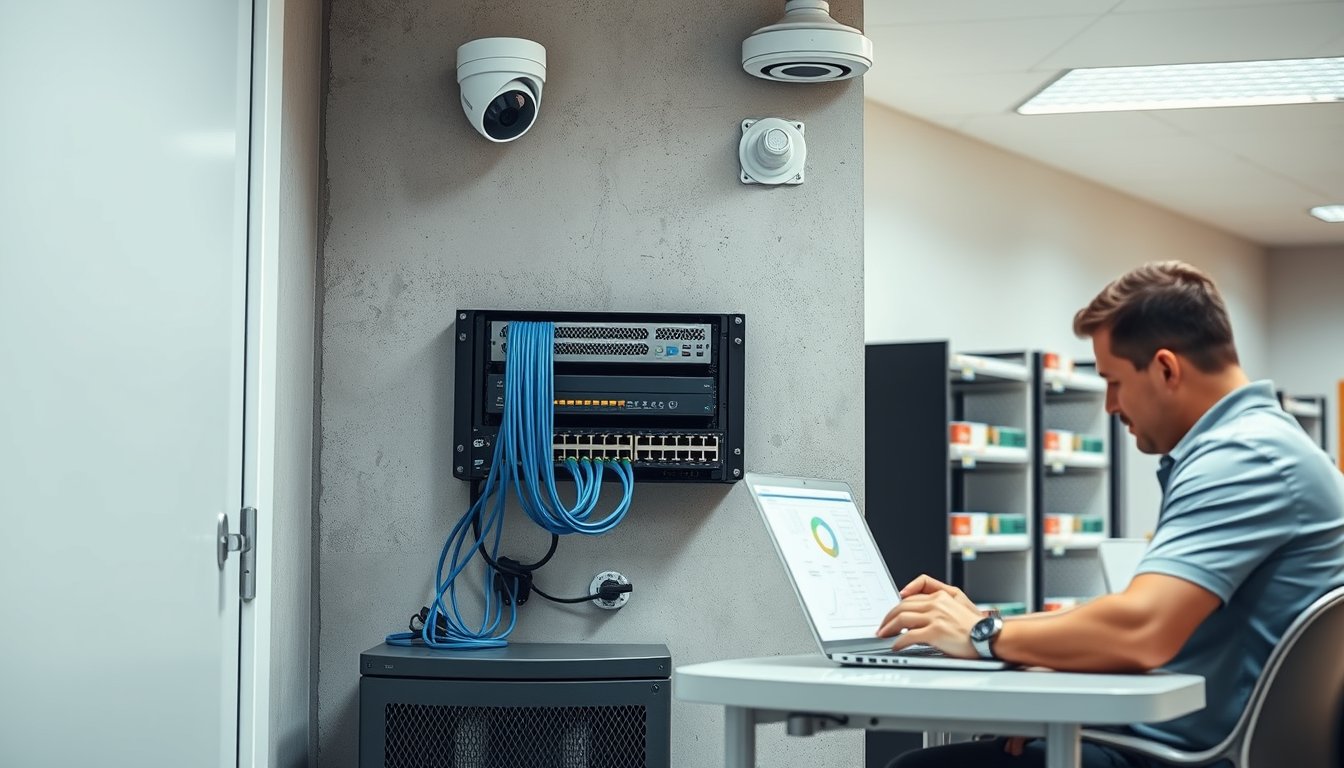
The ₹14 lakh invoice that should have been ₹2.1 lakh
In February 2025 we were called into a 38-store apparel chain in Bengaluru. Their previous consultant had quoted ₹14.2 lakh for PCI DSS work: new firewalls at every store, a SIEM, a log management platform, a full internal vulnerability scanning tool, and a QSA-led Report on Compliance. The chain processes about 900 card transactions a day. Roughly ₹4.6 lakh of monthly card volume.
After two days on site we found the actual cardholder data environment was three things: a payment gateway iframe on the e-commerce site, one HDFC Pin Pad at each POS terminal, and a single MPLS-connected store controller at the head office that relayed settlement files. The 38 store LANs, the HR system, the inventory server, the CCTV network and the 61 laptops were not in scope at all — but the previous consultant had scoped them in because nobody had drawn a network diagram.
The final, auditable scope was 11 systems. The bill came in at ₹2.1 lakh plus ₹38,000 in ASV scans. That is the entire point of this article: in PCI DSS, the work you don't do is worth more than the work you do. For Indian retailers, scope reduction is not an optimisation. It is the strategy.
If you want to know how SynergyScape approaches the segmentation and surveillance side of this, our security and surveillance practice is the relevant page. But read this first, because the decisions come before the vendor.
What PCI DSS v4.0 actually requires of a retailer in 2026
The current standard is PCI DSS v4.0.1, published by the PCI Security Standards Council in June 2024. The future-dated requirements from v4.0 became mandatory on 31 March 2025. That matters because a lot of blog content still floating around describes the v3.2.1 world, which was retired on 31 March 2024.
Three things changed that hit retailers specifically:
- MFA is now mandatory for all access into the cardholder data environment (CDE) — requirement 8.4.2 — not just for administrators. If your store manager logs into the POS back-office to void a transaction, and that back-office can reach the CDE, MFA applies.
- Targeted risk analyses are required for things like e-commerce scripts on payment pages (requirement 6.4.3) and for the frequency of periodic controls. You cannot just tick a box; you have to write down why you chose the frequency you did.
- The 12 requirement areas are now grouped under 6 goals, which is cosmetic, but the reporting templates changed and your QSA will ask for evidence in the new format.
Separately, the RBI's 2022 mandate that merchants must not store card-on-file (CoF) data themselves — only tokenise through authorised networks — means the typical Indian retailer should have almost no card data at rest. If you are still storing PAN in a local database, that is the first thing to fix, and it is also the first thing that decides your SAQ.
The SAQ decision tree: which one you actually file
The Self-Assessment Questionnaire (SAQ) you file determines 80% of your cost. Retailers routinely file the wrong one because they assume "we accept cards, so we're SAQ D". That is nearly always false.
| Scenario | Correct SAQ | Controls | Approx. effort (2026) | Typical cost if outsourced |
|---|---|---|---|---|
| E-commerce only, fully hosted checkout (Razorpay, PayU, Cashfree redirect), no card data touches your servers | SAQ A | ~34 | 2-3 days | ₹35,000 – ₹60,000 |
| E-commerce, checkout on your page but iframed from a PCI-validated provider, and your page loads third-party scripts that could affect the payment page | SAQ A-EP | ~139 | 3-5 weeks | ₹1.4 – ₹2.6 lakh |
| Card-present retail only, P2PE-validated terminals, no electronic storage of PAN | SAQ B-IP or SAQ P2PE | ~40 / ~33 | 1-2 weeks | ₹45,000 – ₹90,000 |
| Standalone dial-up or IP terminal, no electronic storage | SAQ B / SAQ B-IP | ~40 | 3-5 days | ₹30,000 – ₹55,000 |
| Mixed: card-present plus e-commerce on your own servers, or any electronic PAN storage | SAQ D (Merchant) | ~330 | 8-16 weeks | ₹4.5 – ₹9 lakh |
That last row is where nearly every Indian retail chain ends up by default — and where most of them should not be. Two of the five rows above collapse to SAQ D only if the merchant insists on controlling the payment page, storing settlement files with PAN, or running a call centre that takes card numbers over the phone.
The single biggest scope-reduction lever in Indian retail right now is: stop taking card numbers anywhere except a validated terminal or a hosted payment page. That one decision moves a 200-user chain from SAQ D (₹6-9 lakh, 12 weeks, quarterly internal scans, penetration testing) to SAQ B-IP (under ₹1 lakh, two weeks, no internal scanning).
Where SAQ A gets misapplied
SAQ A is only valid if the merchant's website does not receive card data and the merchant does not store, process or transmit it. If you use Razorpay's hosted checkout, you are fine. If you use Razorpay's custom integration where the card form is on your domain but the fields are iframed from Razorpay, that is SAQ A-EP, not SAQ A, because the page your customer loads is yours and a script compromise on that page could exfiltrate the iframe contents.
We see this mistake constantly. A Bengaluru D2C brand we worked with in 2025 had been self-filing SAQ A for three years while running a custom checkout with a third-party analytics script on the payment page. Their acquiring bank's annual review caught it. The remediation was to move to the hosted checkout, which took their developers four days, and they moved to SAQ A. Cost of the mistake: three years of technically invalid attestation and one very uncomfortable call with the bank.
Scope reduction through segmentation: the network changes
The PCI DSS scope is the set of systems that store, process or transmit cardholder data, plus anything connected to them. "Connected" is the word that eats budgets. If your POS server shares a flat /16 VLAN with the HR database and the CCTV NVR, then in the auditor's reading, everything on that VLAN is connected to the CDE and therefore in scope.
Segmentation is how you break that chain. It is also the single highest-leverage investment a mid-size Indian retailer can make, because it converts a per-store problem into a per-site problem.
What a segmented retail network actually looks like
A workable design for a 20-50 store chain:
- Store VLAN (VLAN 10): POS terminals, store controller, receipt printers. No internet egress except to the payment processor's IP ranges and the head-office concentrator. No laptops, no phones, no guest Wi-Fi.
- Store back-office VLAN (VLAN 20): store manager's laptop, stock-taking tablets, the local NAS. Blocked from VLAN 10 by an ACL.
- CCTV VLAN (VLAN 30): NVRs and cameras. No route to VLAN 10 or 20. This is where a lot of Indian retailers get caught — CCTV cameras with default credentials on the same flat network as the POS is the classic card-data compromise vector.
- Head office CDE zone: the settlement server and the two admin jump hosts. Surrounded by a firewall with an explicit allow-list. There is no path from the corporate LAN into this zone except via the jump host, and the jump host logs every session.
- Everything else: corporate LAN, out of scope, provided the segmentation is enforced by a device (firewall or L3 switch ACL) and tested at least annually and after any change.
That last clause is where audits live or die. The QSA will not just look at your diagram. They will ask you to demonstrate that the segmentation is enforced, typically by showing a firewall rule export and a penetration test result confirming the corporate LAN cannot reach the CDE. A diagram with no enforcement evidence is a fail.
The gear and the numbers
For a 30-store chain, a realistic segmentation build in 2026:
| Component | Realistic model | Per-site cost (2026) | Notes |
|---|---|---|---|
| Store firewall | FortiGate 40F / 50G, or Sophos XGS 88 | ₹38,000 – ₹55,000 | 50G if you need 1 Gbps throughput with IPS on |
| Head-office CDE firewall pair | FortiGate 90G HA pair | ₹1.9 – ₹2.6 lakh for the pair | Required if you run settlement servers on-prem |
| Store switch with VLAN support | Cisco CBS350-8P / Aruba Instant On 1930 | ₹18,000 – ₹26,000 | Do not use unmanaged switches in a CDE — a common shortcut that fails audit |
| Centralised logging | Synology RS1221+ with 4x 4TB RAID10, or a cloud SIEM | ₹1.2 – ₹1.9 lakh one time | Requirement 10.5.1 wants 12 months of logs, 3 months immediately available |
| Segmentation pen test | Annual, third party | ₹85,000 – ₹1.4 lakh | Must include CDE-to-corporate pivot attempts |
A 30-store rollout of the above, including labour at Bangalore rates, lands between ₹34 lakh and ₹52 lakh one time in 2026 pricing, plus ₹2.4-3.6 lakh a year for pen test and log retention. That sounds large. But compare it to the alternative: 30 stores × 8 POS terminals × in-scope flat network, which is roughly 700 in-scope systems to evidence for a SAQ D. The SAQ D work for 700 systems, done properly, runs to ₹18-25 lakh a year in QSA fees alone. Segmentation pays back inside two years and lets you file a much lighter SAQ.
Where segmentation is not the right answer
If you have fewer than five stores and card-present only, do not build a segmentation project. File SAQ B-IP, keep the terminals on a separate VLAN from the Wi-Fi, and move on. The engineering overhead of maintaining zones across a five-store estate exceeds the audit savings. We tell clients this regularly and it costs us the project; it is still the right advice.
Quarterly ASV scans: what actually goes wrong
If your SAQ requires external scanning — SAQ A-EP and SAQ D do; SAQ A, B, B-IP and P2PE generally do not unless the acquirer imposes it — you need an Approved Scanning Vendor to run four passing quarterly scans per external IP. The pass is defined as zero vulnerabilities at CVSS 4.0 or above, or a documented exception accepted by the acquirer.
The vendor list is fixed by the PCI SSC. In India, common ASV choices are SISA, Attest Security, SecureLayer7, and the Indian arms of international vendors. 2026 pricing for a single external IP, four scans a year:
- Small ASV (single IP, basic): ₹28,000 – ₹45,000 per year
- Mid-tier vendor with a portal and support: ₹55,000 – ₹95,000 per year
- Enterprise ASV with a dedicated account manager: ₹1.4 lakh+ per year
Add ₹18,000 – ₹40,000 per IP for remediation support if you need help interpreting the findings, which most retailers do the first year.
The failure story
In August 2024, a 22-store electronics retailer on Old Madras Road came to us because they had failed their ASV scan for the fifth consecutive quarter. Each fail pushed their compliance date and their acquirer had started holding settlement. The failing finding was a TLS 1.0 endpoint on a public IP, with a self-signed certificate, running an end-of-life Tomcat 6 instance that a former vendor had deployed in 2017 for a "temporary" stock-lookup service nobody remembered.
It took three hours to find the service and twenty minutes to decommission it. But the five failed quarters had cost them approximately ₹4.8 lakh in delayed settlements, escalation calls, and an emergency consultant engagement. The lesson is not that old Tomcat is bad. The lesson is that nobody owned the external IP inventory, so nobody knew the service existed.
Fix: a documented external attack-surface inventory, refreshed monthly, with a named owner per IP. That is requirement 12.5.2 territory, and it is free if you already have the discipline.
Scanning pitfalls specific to Indian retail
- Shared IP with your e-commerce host. If your storefront sits on a shared hosting IP with 200 other tenants, the ASV scan will flag findings that are not yours and you cannot remediate them. Move to a dedicated IP or a WAF-fronted setup before the first scan.
- SD-WAN and MPLS with public IPs. Many Indian retailers run MPLS through BSNL or Tata Communications and get a range of public IPs. Every public IP that can reach the CDE is in scope. If you only need one, give back the rest.
- Monsoon-related downtime. We have seen scans fail because the target was unreachable during a Bengaluru power cut, and the ASV billed it as a failed scan requiring a re-run. Coordinate scan windows with your UPS runtime, and ask the ASV to schedule in the morning when grid power is typically more stable.
The controls that cost the most, and what they actually mean
Requirement 8: MFA everywhere
MFA for all CDE access in 2026 for a retail chain typically means:
- Entra ID P1 (₹570 per user per month list, less via CSP) for corporate identities, with Conditional Access requiring MFA into the CDE jump host.
- Hardware tokens or FIDO2 keys for the two or three administrative accounts that can modify settlement files. YubiKey 5 NFC at ₹5,800 each; buy ten.
- Device-based MFA for POS admin logins where the terminal itself is a shared device. Some acquirers accept a per-terminal certificate with a PIN as a second factor; confirm in writing with your acquirer before assuming this is acceptable.
Total for a 150-user retailer: ₹1.4 – ₹2.2 lakh per year in licensing plus one-time token costs. Most of that is licensing you probably already pay for Microsoft 365.
Requirement 10: logging and time sync
The most commonly under-budgeted control in Indian retail. You need centralised logging with 12 months retention and 3 months online. If your POS terminals generate ~1,200 log events a day each and you have 30 stores × 6 terminals, that is ~216,000 events a day, ~6.5 million a month. A Synology RS1221+ with 4x 4TB drives handles that comfortably for two years at approximately ₹1.5 lakh one time. A cloud SIEM at ₹15-30 per GB ingested would cost you ₹40,000-₹80,000 a month for the same volume. This is one place where on-prem beats cloud for an Indian retailer, and we say that despite being an Azure-heavy shop.
Do not skip time sync (requirement 10.6). Every POS and every switch must sync to an authenticated NTP source. We have watched audits derailed because the POS controller was 47 minutes off, making log correlation impossible.
Requirement 11: internal vulnerability scanning and pen testing
If you are on SAQ D, you need quarterly internal vulnerability scans and an annual internal and external penetration test. If you are on SAQ B-IP or SAQ A, this collapses to almost nothing.
Costs in 2026 for SAQ D retailers:
- Quarterly internal scans: ₹45,000 – ₹80,000 per year with a tool like Nessus Professional (₹42,000/year for the license) plus staff time, or ₹1.2 – ₹1.8 lakh fully outsourced.
- Annual internal + external pen test: ₹1.6 – ₹2.8 lakh for a 20-50 store estate.
- Segmentation validation test (can be folded into the pen test): ₹40,000 – ₹75,000 incremental.
That is ₹3.4 – ₹5.4 lakh per year on requirement 11 alone for a SAQ D retailer, versus under ₹35,000 for a SAQ B-IP retailer who only needs the ASV scan their acquirer requests. This is the arithmetic that should drive your SAQ decision before you buy a single firewall.
Requirement 12: policies and the DPDP overlay
The Digital Personal Data Protection Act, 2023 and its Rules notified in late 2025 mean Indian retailers now have two compliance regimes to satisfy with overlapping but not identical evidence. PCI DSS asks about cardholder data; DPDP asks about all personal data. Where they overlap:
- Access control policies and logs (PCI 7 and 10, DPDP security safeguards)
- Breach notification (PCI 12.10, DPDP Rule on notifying the Data Protection Board within 72 hours of becoming aware)
- Vendor management (PCI 12.8, DPDP consent-manager and processor contracts)
Write one policy set, not two. A single information security policy that maps to both, with a control matrix in the appendix, saves 30-40 hours of documentation work per year. We do this for clients routinely and it is the most underrated efficiency in Indian compliance work.
CERT-In obligations that sit alongside PCI DSS
If you are a retail entity with turnover above thresholds that make you an "intermediary" or if you operate the payment infrastructure, you have CERT-In directions from April 2022, amended 2023. The relevant parts for retailers:
- Six-hour incident reporting to CERT-In for specified incident types, including unauthorised access to card data.
- 180-day log retention within India. Note: 180 days is shorter than PCI DSS's 12 months, so PCI drives the policy.
- Maintaining a list of all logs and reporting synchronisation to a central NTP, which maps neatly onto PCI requirement 10.6.
If you are a small retailer using a third-party gateway, most CERT-In obligations sit with the gateway, not you. Confirm in your processor contract. If you run your own payment processing for even a portion of transactions, they sit with you and the six-hour clock is genuinely difficult to meet without an incident response retainer. Budget for one: ₹85,000 – ₹1.6 lakh per year for a retainer with a Bengaluru-based IR firm.
What the whole thing costs: three real configurations
All figures 2026 pricing, GST extra at 18%. Services attract 18% GST; hardware attracts 18% unless you have a specific exemption, which retail does not.
| Configuration | SAQ | One-time build | Annual run | Total year 1 |
|---|---|---|---|---|
| 1-5 stores, card-present only, validated terminals, no e-comm | SAQ B-IP | ₹65,000 – ₹1.1 lakh (segmentation VLANs on existing switches, token costs) | ₹45,000 – ₹85,000 | ₹1.1 – ₹1.95 lakh |
| 10-30 stores + hosted e-commerce checkout | SAQ A + SAQ B-IP | ₹28 – ₹42 lakh (segmentation, firewalls, logging) | ₹2.6 – ₹4.2 lakh | ₹30 – ₹46 lakh |
| 30+ stores + custom checkout on own domain | SAQ D (Merchant) | ₹55 – ₹85 lakh | ₹9 – ₹16 lakh (QSA, ASV, pen test, internal scans) | ₹64 lakh – ₹1.01 crore |
The middle row is where most Bangalore and Karnataka mid-size chains land, and it is the row where the money is well spent because it converts an annually renewing QSA dependency into a fixed infrastructure asset. The third row is the one to avoid by changing the checkout architecture, and the change typically costs a developer fortnight.
Vendor selection: what to ask, what to skip
When you engage a QSA in India — SISA, Aujas, KPMG, Deloitte, or a smaller Bengaluru firm — the questions that separate a good engagement from an expensive one:
- "Will the quote include scope confirmation as a separate fixed-price deliverable before the ROC work starts?" If they say no, walk. You want the scope document before you commit to audit fees.
- "What is the assumption about the merchant's e-commerce checkout?" If they assume SAQ D for a hosted-checkout retailer, they are hedging. Push back.
- "What is your experience with acquirers in India — HDFC, ICICI, Axis, PayU?" Each acquirer has different evidence expectations. A QSA who has not dealt with your acquirer will burn weeks.
- "Will you review the segmentation design before we build it?" This is the single highest-return hour you can buy. Better to know the design fails before the hardware arrives.
What to skip: QSA-brokered hardware. Some firms will quote firewalls at a 60-80% markup. Buy the FortiGate through your regular IT partner — or through SynergyScape's security practice — and have the QSA review the design, not supply the kit.
The Bangalore operational details that actually bite
A few things specific to running this in Bengaluru that come up in almost every engagement:
- ISP lead times for a new store. Airtel and Jio business fibre take 12-25 working days in most Bangalore areas in 2026; ACT is sometimes faster, sometimes not, and depends on the building's existing duct. If your store opens before the CDE-compliant circuit is in, you have a store running on 4G failover, which is not acceptable for card processing. Sequence the circuit order before the fit-out finishes.
- Power reliability. Bangalore's grid is more stable than it was, but a store with a single UPS and no generator will drop the POS network during load-shedding events, and unprompted downtime during a settlement window is a reconciliation problem. Better UPSs (APC Smart-UPS 1500VA at ~₹24,000) are worth it for any store doing more than ₹1 lakh a day in card volume.
- Monsoon and cabling. June-September is when we see water ingress into exterior Cat6 runs and in ceiling voids. If your store's POS cabling runs near an exterior wall or under an AC drip tray, get it in conduit. Cabling is cheap; failing an audit because a POS terminal is intermittently unreachable by the ASV scanner is not.
- The rented-store problem. Many Bangalore retailers operate in leased retail space where the landlord controls the building's network infrastructure. If you cannot control the cable path or install your own firewall, you cannot satisfy segmentation. Get this into the lease before signing. We have seen retailers stuck on SAQ D for years because the mall's shared Wi-Fi was the only connectivity available.
Frequently asked questions
Do Indian retailers really need PCI DSS compliance if they use Razorpay or PayU?
Yes, but the obligation is much lighter than most people assume. If you use a fully hosted checkout and never touch card data, you file SAQ A, which is around 34 controls and costs ₹35,000-₹60,000 to complete in 2026. Your acquirer will ask for the attestation annually. You cannot skip it, but you also do not need ₹5 lakh of infrastructure to satisfy it.
How much does PCI DSS compliance cost for a 20-store retail chain in India?
For a 20-store chain with hosted e-commerce checkout, expect ₹28-42 lakh one-time build cost (segmentation, firewalls, centralised logging) and ₹2.6-4.2 lakh per year in running costs including ASV scans and a light annual review. GST at 18% applies to both. If a vendor quotes under ₹8 lakh in year one, they are either not doing segmentation or they are mis-scoping you as SAQ A when you are not.
Can I use a shared hosting IP for my e-commerce site and still pass the ASV scan?
No. If your site is on a shared IP, the ASV scan covers the whole IP and you will inherit other tenants' vulnerabilities, which you cannot remediate. Move to a dedicated IP or a WAF-fronted host before your first scanning quarter. The move typically costs ₹15,000-₹40,000 one time and saves a failed scan cycle.
What is the difference between SAQ A and SAQ A-EP for an Indian e-commerce retailer?
SAQ A applies if your site never receives card data — hosted checkout on the processor's domain. SAQ A-EP applies if your page hosts the payment form, even if the card fields themselves are iframed from the processor. The second case is far more common than retailers realise, and it drags in around 139 controls versus about 34. If you are unsure, check whether any JavaScript on your checkout page is served from your domain versus the processor's.
Do I need a QSA if I am filing SAQ B-IP?
No. SAQ B-IP is a self-assessment questionnaire. You complete it, sign the Attestation of Compliance, and submit it to your acquirer. Most retailers still engage a consultant to help complete it correctly, at ₹45,000-₹90,000 for a mid-size chain, but that is optional. A QSA-led Report on Compliance is only required for Level 1 merchants, generally those processing over 6 million card transactions a year.
How does the DPDP Act interact with PCI DSS for a retailer?
They overlap on access control, logging, breach notification and vendor contracts. Write one integrated information security policy and maintain a control matrix mapping PCI DSS requirements to DPDP obligations. Doing them separately roughly doubles the documentation burden. SynergyScape's team has run this integration for retail clients; see our security services or contact us for a scope review.
Your next concrete step
The right first action is not to call a QSA or buy a firewall. It is to draw the cardholder data environment on one page. List every system that stores, processes or transmits card data, and every system connected to those. If the list runs past 30 items, your job this month is to shrink it, not to buy controls.
Book a two-hour scope workshop. Bring your network diagram, your acquirer contract, and your e-commerce checkout architecture. The output you want is a single decision: which SAQ you are targeting, and what has to change in the architecture for that SAQ to be truthful. Everything else — the firewalls, the segmentation, the scans — follows from that decision, and not before.
Write the decision down. Date it. Give it an owner. Then, and only then, start buying kit.