
How Does IT vendor Bangalore Differ Across Industries?
- May 12, 2026
- Posted by:
- Category: Business Strategy & OD
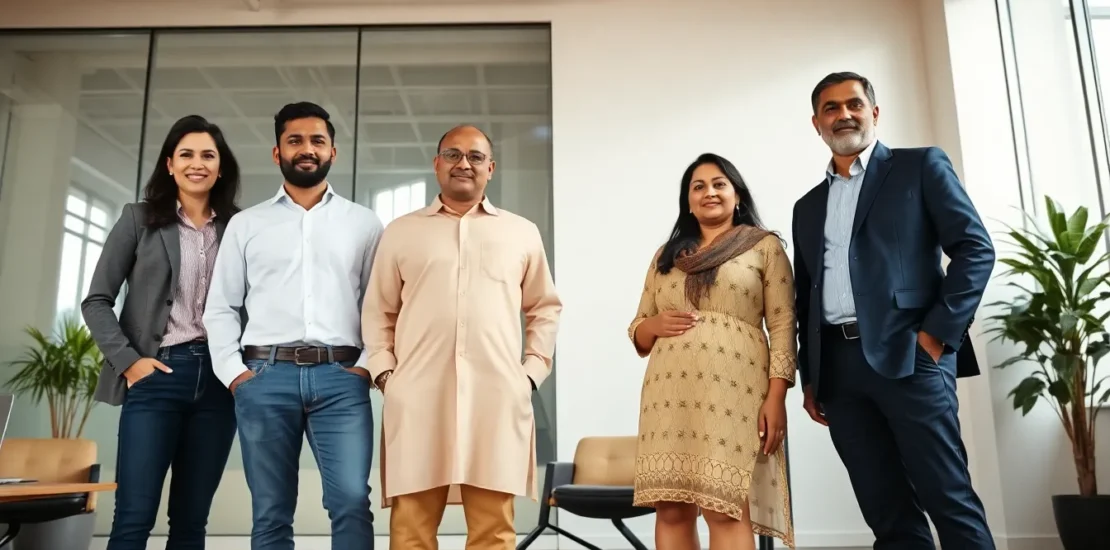
IT vendor Bangalore refers to the ecosystem of technology service providers, software firms, and consulting partners based in Bangalore, India—often serving as outsourced or strategic IT partners for businesses globally. The term encompasses everything from cloud infrastructure providers to custom software developers, and its application varies dramatically by industry due to differing compliance needs, operational rhythms, and risk appetites.
Opening
Imagine two conference rooms, 20 kilometers apart in Bangalore’s Electronic City. In the first, a BFSI (banking, financial services, and insurance) CIO is negotiating with an IT vendor Bangalore about data residency, ISO 27001 certifications, and real-time fraud detection APIs. The vendor’s team wears suits, the contract runs 80 pages, and the word “audit” appears 17 times. Across town, a manufacturing plant manager is on a video call with the same vendor’s industrial IoT team. He’s asking about SCADA integration, edge device latency, and how to reduce unplanned downtime on a shop floor that runs 24/7. His biggest worry isn’t compliance—it’s a ₹2 lakh per minute loss if the conveyor belt stops. Same city, same vendor, completely different conversations. That’s the reality of IT vendor Bangalore—it’s not a one-size-fits-all service; it’s a chameleon that changes color based on the industry it serves.
—
H2: What Is IT vendor Bangalore and Why Does It Vary by Industry?
At its core, IT vendor Bangalore represents a dense concentration of tech talent—over 500,000 engineers, 2,000+ registered IT firms, and a startup ecosystem that churns out new solutions daily. But the “vendor” isn’t just a provider of code or servers. It’s a strategic partner whose role shifts based on the industry’s DNA.
Why the variation? Three factors drive the difference:
1. Regulatory gravity: BFSI and healthcare operate under heavy regulation (RBI guidelines, HIPAA, GDPR), so vendors must prioritize compliance over speed. Manufacturing and retail, while regulated, have more flexibility.
2. Operational tempo: A stock exchange needs millisecond response times; a textile factory needs reliable batch processing. Vendors must match these rhythms.
3. Risk tolerance: A startup retailer might accept 99.5% uptime; a hospital ICU system demands 99.999%. The vendor’s SLAs and pricing adjust accordingly.
For example, when a Bangalore-based vendor pitches a cloud migration to a pharmaceutical company, they must discuss GxP validation and 21 CFR Part 11 compliance. The same vendor pitching to a logistics firm talks about route optimization APIs and real-time tracking dashboards. The technology stack might be similar, but the conversation is worlds apart.
—
H2: How Does IT vendor Bangalore Work in IT and Technology Companies?
In the IT sector itself—think product startups, SaaS firms, and enterprise software houses—the relationship with an IT vendor Bangalore is often the most fluid and collaborative. Here, the vendor is less a contractor and more an extension of the internal team.
Specific practices:
– Agile co-location: Many tech companies embed vendor engineers directly into their squads. For instance, a Bangalore-based DevOps vendor might have 10 engineers sitting in a client’s WeWork in Koramangala, attending daily stand-ups and contributing to GitHub repos. The vendor’s project manager reports to the client’s VP of Engineering.
– Outcome-based pricing: Instead of hourly rates, tech companies often negotiate “per feature” or “per sprint” pricing. A vendor building a mobile app for a fintech startup might charge ₹15 lakh per major release, with bonuses for early delivery.
– Rapid prototyping: Tech clients expect vendors to iterate fast. A vendor might deliver a minimum viable product (MVP) in 2 weeks, then refine based on A/B testing data. This requires vendors to have dedicated UX researchers and data analysts on staff.
Example: When a US-based SaaS company needed to build a customer analytics module, they turned to an IT vendor Bangalore specializing in React and Python. The vendor set up a 15-person team in Whitefield, with daily video syncs at 7 PM IST (9 AM EST). Within 3 months, the module was live, handling 50,000 queries per second. The vendor’s key insight? They didn’t just code—they also advised on database indexing and caching strategies, adding value beyond the brief.
Actionable insight for tech leaders: Treat your vendor as a partner, not a supplier. Share your product roadmap quarterly, invite them to strategy offsites, and invest in joint IP protection. The best vendors will proactively suggest improvements—but only if they feel invested in your success.
—
H2: How Does IT vendor Bangalore Apply in Manufacturing and Operations?
Manufacturing is a different beast. Here, the IT vendor Bangalore often deals with operational technology (OT) rather than pure IT. Think PLCs, SCADA systems, MES (manufacturing execution systems), and IoT sensors. The stakes are physical: a software bug can stop a production line, damage equipment, or cause safety incidents.
Factory floor vs. corporate office:
– On the floor: Vendors install edge servers near machinery to process data locally (low latency). They train plant supervisors on dashboards that show OEE (overall equipment effectiveness) in real time. A vendor might deploy a predictive maintenance model that analyzes vibration data from motors—catching failures 48 hours before they happen.
– In the office: The same vendor might handle ERP integration (SAP, Oracle) for inventory management, supply chain visibility, and financial reporting. But the corporate team often has different priorities: cost reduction, compliance with BIS standards, and vendor consolidation.
Example: A Bangalore-based vendor worked with a automotive parts manufacturer in Hosur. The challenge: unplanned downtime on a CNC machining line was costing ₹8 lakh per hour. The vendor deployed IoT sensors on 50 machines, built a machine learning model to predict tool wear, and integrated alerts into the plant manager’s WhatsApp. Result: downtime dropped 35% in 6 months. The vendor’s team included mechanical engineers (not just coders) who understood tool geometry and cutting parameters.
Actionable insight for manufacturing leaders: When evaluating an IT vendor Bangalore, ask for proof of OT experience—not just IT certifications. Request case studies from similar industries (auto, pharma, FMCG). Also, ensure the vendor can handle “brownfield” environments (older machines without native connectivity). Many vendors specialize in retrofitting sensors to legacy equipment.
—
H2: What About IT vendor Bangalore in Healthcare, BFSI, and Retail?
These three industries share a common thread: they handle sensitive data (patient records, financial transactions, customer profiles) and face strict regulations. But their operational models differ sharply.
Healthcare:
– Focus: EHR/EMR systems, telemedicine platforms, medical device integration, HIPAA compliance.
– Vendor role: A Bangalore vendor might build a cloud-based PACS (picture archiving and communication system) for a hospital chain. They must ensure data encryption at rest and in transit, audit trails, and role-based access. The vendor’s team includes HIPAA-trained developers and a compliance officer.
– Example: A vendor developed a tele-ICU platform for a chain of 50 hospitals. It allowed remote intensivists to monitor ventilators and cameras in real time. The vendor had to certify the platform under India’s Digital Information Security in Healthcare Act (DISHA) and integrate with existing HL7 interfaces.
– Actionable insight: Demand a Data Protection Impact Assessment (DPIA) from your vendor. Also, ensure they have a breach notification protocol—healthcare regulators require reporting within 72 hours.
BFSI:
– Focus: Core banking systems, payment gateways, fraud detection, KYC/AML compliance, RBI guidelines.
– Vendor role: A vendor might build a UPI-based payment app for a cooperative bank. They must adhere to NPCI standards, conduct penetration testing, and ensure 99.999% uptime. The vendor’s team includes certified bankers (ex-ICICI, HDFC) who understand regulatory nuances.
– Example: A vendor in Bangalore’s MG Road area developed an AI-based fraud detection system for a mid-sized NBFC. It analyzed transaction patterns in real time, flagging anomalies like sudden high-value transfers from dormant accounts. The system reduced false positives by 40% compared to rule-based engines.
– Actionable insight: Insist on SOC 2 Type II reports and RBI-approved data centers. Also, ask about the vendor’s experience with your specific regulator (RBI, SEBI, IRDAI). A vendor who has worked with multiple banks will know the common pitfalls.
Retail:
– Focus: E-commerce platforms, POS systems, inventory management, CRM, omnichannel integration.
– Vendor role: A vendor might build a mobile app for a fashion retailer, integrating with Shopify, warehouse management, and last-mile delivery APIs. Speed to market is critical—retailers want features live before the festive season.
– Example: A Bangalore vendor helped a D2C brand launch a subscription-based beauty box service. They built a recommendation engine using past purchase data, integrated with Razorpay for payments, and set up automated email campaigns. The vendor’s team included a former Flipkart product manager who understood conversion funnels.
– Actionable insight: Look for vendors with experience in high-traffic events (Big Billion Days, Diwali sales). Ask about their load testing practices and auto-scaling capabilities. Also, ensure they can handle returns and refunds workflows—a common pain point.
—
H2: What Is the Universal Framework for IT vendor Bangalore?
Despite industry differences, some principles apply everywhere. Here’s a cross-industry framework with a comparison table:
| Industry | Key Challenge | Best Practice | Common Mistake |
|————–|——————-|——————-|———————|
| IT/Tech | Maintaining code quality across distributed teams | Use pair programming and code reviews with vendor engineers | Treating vendor as “body shop” without skill development |
| Manufacturing | Bridging OT-IT gap | Deploy hybrid teams (mechanical + software engineers) | Assuming IT vendors understand factory floor constraints |
| Healthcare | Data privacy and interoperability | Require HIPAA/DISHA compliance and HL7 FHIR expertise | Choosing cheapest vendor without healthcare domain knowledge |
| BFSI | Regulatory compliance and fraud prevention | Conduct quarterly security audits and penetration tests | Skipping RBI-mandated data localization requirements |
| Retail | Handling traffic spikes and returns | Implement auto-scaling and robust returns management APIs | Ignoring peak season load testing until it’s too late |
Universal principles:
1. Start with a pilot: Don’t sign a 3-year contract. Begin with a 3-month proof of concept to test communication, quality, and cultural fit.
2. Define SLAs clearly: Include uptime, response time, and escalation paths. For BFSI, add regulatory reporting timelines.
3. Invest in knowledge transfer: Your vendor should document everything—code, architecture, runbooks. This protects you if the relationship ends.
4. Build a governance cadence: Weekly stand-ups, monthly reviews, quarterly business reviews. Use tools like Jira, Slack, and shared dashboards.
—
H2: How Should SMEs Approach IT vendor Bangalore Differently?
Small and medium enterprises (SMEs) often lack the budget and internal IT muscle of large corporations. But they can still leverage IT vendor Bangalore effectively with a few tweaks:
– Start with a fractional CTO: Instead of hiring a full-time tech lead, engage a vendor’s senior architect for 10 hours a week. They can guide technology choices, review code, and manage the vendor relationship.
– Use outcome-based pricing: SMEs can’t afford hourly rates that balloon. Negotiate fixed-price projects with clear deliverables—e.g., “Build an MVP with 5 core features for ₹8 lakh in 3 months.”
– Leverage vendor networks: Many Bangalore vendors have “startup programs” with discounted rates, free cloud credits, and access to their alumni network. Ask about this upfront.
– Focus on core vs. context: Outsource non-core functions (e.g., payroll software, CRM customization) while keeping strategic IP in-house. For example, a boutique hotel chain might outsource its booking engine but keep its loyalty program internal.
Example: A small logistics firm in Chennai needed a fleet management app. They hired a Bangalore vendor specializing in React Native and Google Maps APIs. The vendor built the app for ₹6 lakh, including real-time tracking, driver allocation, and invoice generation. The firm’s founder acted as product manager, defining features weekly. The app launched in 4 months and reduced dispatch errors by 60%.
Actionable insight for SME owners: Don’t over-spec. Start with a lean product, test with real users, then iterate. Also, insist on a single point of contact (project manager) who speaks your language—both literally and technically.
—
Conclusion
The IT vendor Bangalore ecosystem is a powerful engine, but its output depends entirely on how well you tune it to your industry’s frequency. A BFSI firm needs a vendor who thinks in terms of risk and compliance; a manufacturer needs one who thinks in terms of uptime and throughput; a retailer needs one who thinks in terms of conversions and customer delight. The common thread is trust, transparency, and a willingness to adapt.
Looking ahead, I see three trends: (1) Vertical specialization—vendors will increasingly focus on one or two industries, building deep domain expertise. (2) AI-driven delivery—vendors will use AI to automate testing, code generation, and project management, reducing costs. (3) Outcome-based models—more clients will pay for results (e.g., “reduce downtime by 20%”) rather than hours. For businesses, the message is clear: choose your IT vendor Bangalore not just for their tech stack, but for their understanding of your world. That’s where the real value lies.
—
FAQ
1. How do I find a reliable IT vendor Bangalore for my industry?
Start with referrals from peers in your sector. Attend industry-specific events in Bangalore (e.g., NASSCOM Product Conclave for tech, India Manufacturing Show for factories). Check vendor case studies and ask for client references in your vertical. Also, verify certifications (ISO 27001 for security, HIPAA for healthcare).
2. What’s the typical cost of engaging an IT vendor Bangalore?
Costs vary widely: ₹500–₹2,000 per hour for senior developers, ₹3–₹15 lakh for a 3-month MVP, ₹50 lakh–₹2 crore for a full-scale enterprise system. SMEs can negotiate fixed-price projects starting at ₹5 lakh. Always get 3 quotes and compare scope, not just price.
3. How do I ensure data security when working with an IT vendor Bangalore?
Sign a comprehensive NDA and data processing agreement. Require the vendor to use encrypted communication (VPN, HTTPS), conduct regular penetration tests, and store data in India-based servers (for BFSI/healthcare). Ask for SOC 2 Type II or ISO 27001 reports. Also, limit access to only necessary team members.
4. Can a single IT vendor Bangalore serve multiple industries?
Yes, but with caveats. Large vendors (e.g., Infosys, Wipro) have vertical practices. Smaller vendors may claim multi-industry capability but often lack depth. For best results, choose a vendor with a dedicated practice in your industry, or split work across specialized vendors.
5. What’s the biggest mistake companies make when hiring an IT vendor Bangalore?
Assuming all vendors are the same. Many companies skip due diligence on domain expertise, leading to mismatched expectations. Another common mistake is poor communication—not defining escalation paths or time zone overlaps. Always have a written scope of work and weekly syncs.
6. How long does it take to onboard an IT vendor Bangalore?
Expect 2–4 weeks for contracting, IP protection, and infrastructure setup. A pilot project can start within 1 month. Full-scale teams (10+ people) may take 6–8 weeks to ramp up, including training on your systems and processes.
—
“Every organization I’ve walked into that was struggling had one thing in common: broken feedback loops between leadership and frontlines.”
— Karthik, Founder & Principal Consultant, SynergyScape
Founder & Principal Consultant, SynergyScape | 15+ Years in HR Consulting & Organizational Development across Indian Enterprises
Transform Your Organization Today
Strategic HR Solutions & Corporate Consulting for Indian Enterprises.
Call: 90366 35585 | Email: synergyscape.blr@gmail.com
Related Articles You Might Find Useful
- How to Choose the Right Technology Partner for Your Bangalore Business: A 90-Day Playbook
- What Does an IT procurement consultant Bangalore Do for Your Business in 2025?
- What Are cloud printing solutions Bangalore and How Can They Save Your Business Money?
- How to Choose Wireless Printing Solutions Bangalore by Industry
- How to Choose and Implement Plotters and Large Format Printers in Bangalore: A 90-Day Playbook