
What Are the Best Cybersecurity Services in Bangalore for Indian Businesses?
- May 4, 2026
- Posted by:
- Category: Business Strategy & OD
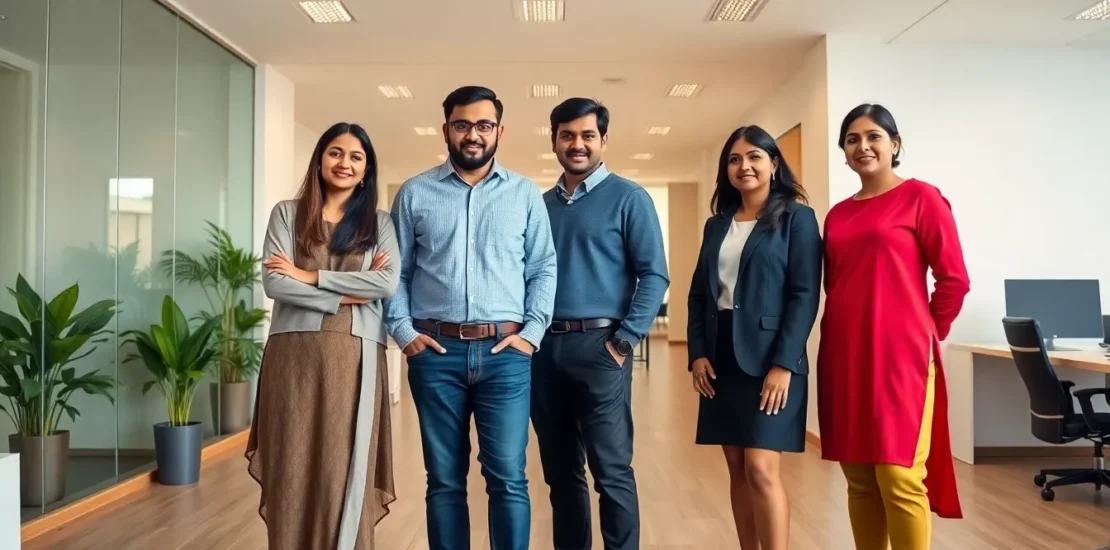
Cybersecurity services in Bangalore refer to a range of professional offerings—from vulnerability assessments and incident response to employee training and compliance audits—designed to protect businesses operating in India’s tech capital from digital threats. These services are tailored to the unique risks faced by Indian enterprises, including supply chain attacks, phishing, and regulatory pressures from bodies like CERT-In. In plain terms, it’s about having a dedicated partner who helps you sleep better at night, knowing your data and operations are secure.
I walked into a mid-sized fintech firm in Bangalore last year, and the CEO—a sharp, no-nonsense woman in her early forties—looked at me with a mix of exhaustion and frustration. Her company had just survived a ransomware attack that locked their customer database for three days. The ransom was paid, but the real cost was trust. Clients were leaving. Employees were jumpy. And the board wanted answers. She said, “Karthik, we thought we were too small to be a target. Now I realize we were just too unprepared.”
That moment stuck with me. Not because of the technical failure—that happens—but because of the human one. The company had invested in firewalls and antivirus software, but no one had thought about the human layer, the process layer, or the cultural layer. They had cybersecurity tools, not cybersecurity services. And in Bangalore, where the startup ecosystem moves at breakneck speed, that distinction is everything.
Over the last 15 years, I’ve seen this pattern repeat across Indian enterprises—from a 50-person e-commerce shop in Koramangala to a 500-employee manufacturing unit in Whitefield. The threat landscape is real, and it’s personal. But here’s the good news: when you get cybersecurity services right, it stops being a cost center and becomes a competitive advantage. You stop reacting and start anticipating.
Let me walk you through what that actually looks like.
What Is cybersecurity services Bangalore and Why Should Indian Businesses Care?
Let’s strip away the jargon. Cybersecurity services in Bangalore aren’t just about installing software or hiring a guy who knows about firewalls. They’re about creating a living, breathing defense system that adapts to how your business actually works. Think of it as a partnership—a team that understands your specific risks, your industry regulations (like the upcoming Digital Personal Data Protection Act), and your company culture.
Why should Indian businesses care? Because the numbers don’t lie. According to a 2023 NASSCOM-DSCI report, India saw over 1.3 million cybersecurity incidents in 2022 alone, with Bangalore being one of the top three cities targeted. The average cost of a data breach for an Indian company is now around ₹18 crore, according to IBM’s Cost of a Data Breach Report. And here’s the kicker: 60% of small and medium businesses that suffer a cyberattack shut down within six months. That’s not a statistic—that’s your neighbor’s startup.
But it’s not just about fear. It’s about opportunity. Indian businesses that invest in robust cybersecurity services—especially in a hub like Bangalore—are better positioned to win global clients, attract top talent, and avoid regulatory fines. I’ve seen companies turn a security audit into a sales pitch: “We’re ISO 27001 certified and SOC 2 compliant.” That opens doors in Europe, the US, and beyond. So yes, you should care—not because you’re scared, but because you want to grow.
What Are the Biggest Challenges with cybersecurity services Bangalore?
Let me be honest with you. The biggest challenge isn’t technology—it’s mindset. I’ve walked into boardrooms where the conversation starts with “How much will this cost?” instead of “What are we protecting?” That’s a red flag. In Bangalore, where the startup culture prizes speed over security, many founders treat cybersecurity as an afterthought. They hire a junior IT person, buy a cheap antivirus, and call it a day. That’s like locking your front door but leaving all the windows wide open.
The second challenge is fragmentation. The cybersecurity services market in Bangalore is crowded—there are hundreds of vendors offering everything from penetration testing to managed detection and response. But most of them operate in silos. You might have one vendor doing your network security, another handling your cloud, and a third managing your employee training. That creates gaps. And attackers love gaps. I’ve seen a company with excellent endpoint protection get breached because their third-party email security vendor had a misconfigured rule. No one was looking at the whole picture.
Third, there’s the talent gap. India faces a shortage of over 1.5 million cybersecurity professionals, and Bangalore is ground zero for that crunch. Good cybersecurity experts are expensive and hard to retain. So many businesses end up with either overpriced consultants or underqualified staff. The result? You pay a lot but get mediocre protection. That’s why the best approach isn’t to build everything in-house—it’s to partner with a service provider who brings the expertise, tools, and processes you need, without the hiring headache.
How Does a Strong cybersecurity services Bangalore Strategy Actually Work?
A strong strategy isn’t about a single tool or a one-time audit. It’s about a layered, ongoing process that covers people, processes, and technology. Here’s a comparison of what most companies do versus what actually works:
| What Most Companies Do | What Actually Works |
|—————————-|————————–|
| Buy a firewall and antivirus, then forget about it | Implement a continuous monitoring and response system with 24/7 SOC |
| Do a one-time penetration test once a year | Run quarterly vulnerability scans and monthly simulated phishing exercises |
| Assign cybersecurity to the IT team as a side responsibility | Create a dedicated security role or partner with a managed security service provider (MSSP) |
| Focus only on external threats | Build insider threat detection and employee awareness programs |
| Ignore compliance until a regulator shows up | Proactively align with frameworks like ISO 27001, SOC 2, and India’s DPDP Act |
| Treat cybersecurity as a cost center | Frame it as a business enabler that reduces risk and builds client trust |
The difference is subtle but profound. When you move from reactive to proactive, from fragmented to integrated, you stop fighting fires and start building resilience. For example, one of my clients—a logistics company in Bangalore—switched from a DIY approach to a managed cybersecurity service. Within six months, they reduced their incident response time from 48 hours to under 2 hours. Their insurance premiums dropped by 15%. And their clients started asking for case studies.
How to Implement cybersecurity services Bangalore Step by Step
Let me give you a practical, no-nonsense roadmap. This isn’t theory—this is what I’ve seen work across dozens of Indian enterprises.
1. Start with a risk assessment. Don’t buy anything until you know what you’re protecting. Map your critical assets—customer data, financial systems, intellectual property. Identify your biggest vulnerabilities. In Bangalore, that often means looking at cloud misconfigurations, third-party integrations, and employee access controls. A good service provider will do this as a first step, usually in 2-4 weeks.
2. Define your compliance requirements. Are you dealing with European clients (GDPR)? Indian regulators (CERT-In, DPDP Act)? Or industry standards (PCI-DSS for payments, HIPAA for healthcare)? Your cybersecurity services must align with these. I’ve seen companies waste crores on tools they didn’t need because they skipped this step. Be specific.
3. Choose a service model that fits your size. For a 20-person startup, a full-time CISO is overkill. Instead, look for a virtual CISO (vCISO) service or a managed detection and response (MDR) provider. For a 200-person company, you might need a dedicated security operations center (SOC) with 24/7 monitoring. In Bangalore, many providers offer tiered packages—pick one that scales with you.
4. Implement employee training first. This is where most companies fail. Your employees are your first line of defense—and your biggest risk. Run monthly phishing simulations, conduct security awareness workshops, and make it part of your onboarding. I tell my clients: “A trained employee is worth more than a thousand firewalls.” Start with a 30-minute session, then build from there.
5. Deploy technical controls in phases. Don’t try to do everything at once. Start with endpoint detection and response (EDR), then move to network segmentation, then email security, then cloud security. Each phase should have a clear timeline and success metric. For example, “Reduce phishing click-through rates from 15% to under 5% in three months.”
6. Set up an incident response plan. This isn’t just a document—it’s a playbook. Define who does what when a breach happens. Include communication templates for customers, regulators, and the media. Test it with a tabletop exercise every quarter. I’ve seen companies panic during a real incident because they had no plan. Don’t be that company.
7. Measure and iterate. Cybersecurity isn’t a one-and-done project. Track metrics like mean time to detect (MTTD), mean time to respond (MTTR), number of incidents, and employee training completion rates. Review these with your provider monthly. Adjust your strategy based on what you learn.
What Results Can You Expect from cybersecurity services Bangalore?
Here’s the honest answer: you won’t see a dramatic overnight transformation. But within 6-12 months, you’ll notice real, measurable shifts. Let me give you a concrete example from a client I worked with—a 150-person SaaS company in Bangalore. Before they engaged a cybersecurity service, they had an average of 12 security incidents per month, mostly phishing and malware. After implementing a layered strategy with employee training and 24/7 monitoring, that number dropped to 2 incidents per month. Their mean time to respond went from 8 hours to 45 minutes.
But the behavioral changes are even more telling. Your employees will start reporting suspicious emails instead of clicking on them. Your IT team will stop working weekends because they’re not constantly putting out fires. Your sales team will use your security certifications as a selling point. And your board will stop asking, “Are we safe?” because they’ll have regular reports showing exactly where you stand.
Financially, the ROI is clear. According to a Ponemon Institute study, companies with a strong cybersecurity posture save an average of ₹1.5 crore per breach compared to those without. And in Bangalore, where the average cost of a data breach is ₹18 crore, that’s not pocket change. But the biggest result is peace of mind. You stop worrying about “what if” and start focusing on growth.
What Do Experts Say About cybersecurity services Bangalore?
Industry experts are unanimous: the days of “set it and forget it” are over. Deloitte’s 2024 Global Cybersecurity Outlook report highlights that 70% of organizations now view cybersecurity as a strategic priority, not just an IT issue. In India, NASSCOM has been pushing for a “cybersecurity-first” approach, especially for startups and SMEs. Their 2023 report notes that companies with a dedicated cybersecurity partner see 40% fewer successful attacks.
McKinsey’s research on digital resilience echoes this. They argue that cybersecurity services should be integrated into business operations, not bolted on later. For Bangalore-based companies, this is especially relevant because of the city’s role as a global tech hub. “Bangalore is the Silicon Valley of India,” says a senior partner at a leading consulting firm. “If you want to compete globally, your cybersecurity posture must be world-class. That means partnering with experts who understand both local regulations and international standards.”
I’ve also seen the impact of frameworks like the NIST Cybersecurity Framework and ISO 27001. Companies that adopt these don’t just get better security—they get better insurance rates, faster client onboarding, and fewer regulatory headaches. In Bangalore, where the startup ecosystem is hyper-competitive, that’s a real edge.
Conclusion
Remember the CEO I told you about at the beginning? She didn’t just survive that ransomware attack—she transformed her company. Within a year, she had a fully managed cybersecurity service in place, with 24/7 monitoring, quarterly audits, and a culture where every employee knew how to spot a phishing email. Her clients came back. Her team felt safer. And she told me, “I wish I had done this before the attack, but I’m glad I did it now.”
That’s the thing about cybersecurity services in Bangalore. It’s not about perfection—it’s about progress. You don’t need to be a tech giant to protect your business. You just need to start. Whether you’re a bootstrapped startup or a growing enterprise, the right partner can make all the difference. So take that first step. Your future self—and your customers—will thank you.
Frequently Asked Questions About cybersecurity services Bangalore
What exactly is included in cybersecurity services in Bangalore?
Cybersecurity services typically include vulnerability assessments, penetration testing, 24/7 security monitoring (SOC), incident response, employee training, compliance audits (ISO 27001, SOC 2, DPDP Act), and managed detection and response (MDR). The exact scope depends on your business size and industry.
How much do cybersecurity services cost for a small business in Bangalore?
Costs vary widely. For a 20-50 person company, you might pay ₹50,000 to ₹2 lakh per month for a managed service. For larger enterprises, it can go up to ₹10 lakh+ per month. Many providers offer tiered packages. Always ask for a free risk assessment first to avoid overpaying.
Do I need cybersecurity services if I have a small team and no sensitive data?
Yes. Even small businesses are targeted because attackers assume you have weak defenses. A single ransomware attack can cost you your entire business. Plus, if you handle any customer data, you’re legally required to protect it under India’s DPDP Act.
How do I choose the right cybersecurity service provider in Bangalore?
Look for providers with experience in your industry, relevant certifications (ISO 27001, SOC 2), and a clear service-level agreement (SLA). Ask for client references and case studies. Avoid providers who promise ‘100% security’—that’s a red flag. Instead, look for ones who talk about risk reduction and continuous improvement.
Can I handle cybersecurity myself with just software?
Software alone isn’t enough. You need human expertise to configure tools, respond to incidents, and train employees. Many businesses try DIY and end up with misconfigured systems or missed alerts. A managed service gives you the expertise without the hiring headache.
How long does it take to see results from cybersecurity services?
You’ll see immediate improvements in monitoring and incident response within weeks. But full cultural change—like employees consistently reporting phishing—takes 3-6 months. Most clients see a 50-70% reduction in security incidents within the first year.
“The best HR teams I’ve worked with don’t call themselves HR. They call themselves business enablers — and they operate like it.”
— Karthik, Founder & Principal Consultant, SynergyScape
Founder & Principal Consultant, SynergyScape | 15+ Years in HR Consulting & Organizational Development across Indian Enterprises
Transform Your Organization Today
Strategic HR Solutions & Corporate Consulting for Indian Enterprises.
Call: 90366 35585 | Email: synergyscape.blr@gmail.com
Related Articles You Might Find Useful
- How Does an IT Security Audit in Bangalore Differ Across Industries?
- How to Choose and Implement Network Assessment Services Bangalore: A 90-Day HR Playbook
- What is the Real Cost of Skipping an IT infrastructure audit Bangalore in 2025?
- How Does IT Asset Disposal in Bangalore Differ Across Industries?
- How to Execute a Flawless Server Relocation in Bangalore: A 90-Day Playbook